What does a SAR require, and why does the narrative take so long?
Under 31 CFR 1020.320, a bank must file "no later than 30 calendar days after the date of initial detection by the bank of facts that may constitute a basis for filing a SAR," with 30 more days to identify a suspect, and "In no case shall reporting be delayed more than 60 calendar days." The SAR and its supporting documentation must be kept "for a period of five years from the date of filing the SAR" and made available to FinCEN, law enforcement and examiners on request.
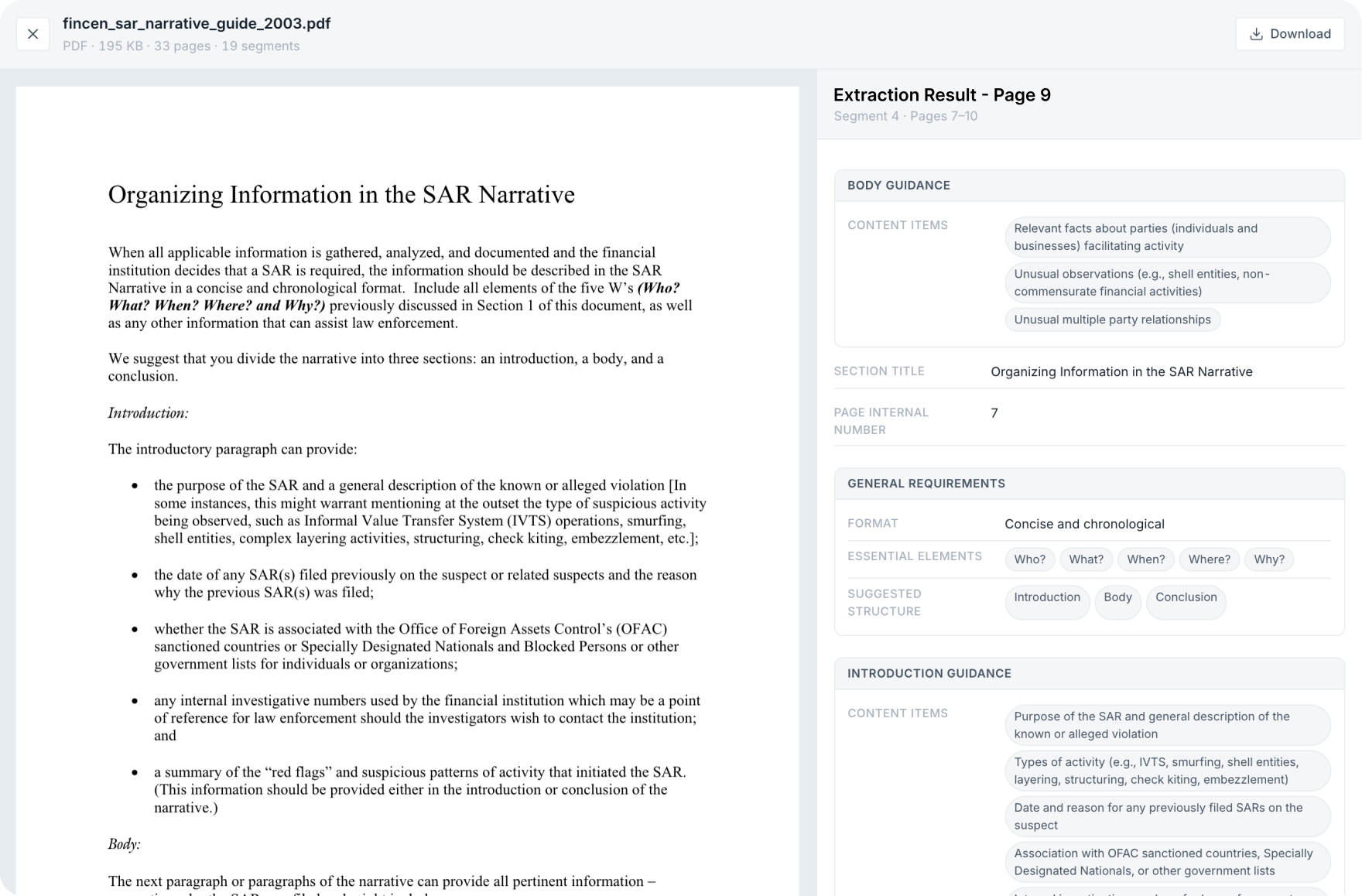
The narrative is the part that takes hours. FinCEN's narrative guidance says "a SAR narrative should identify the five essential elements of information" of who, what, when, where and why, plus how. Its list of common errors notes that "most inadequate narratives merely repeat data in the form's fixed fields."
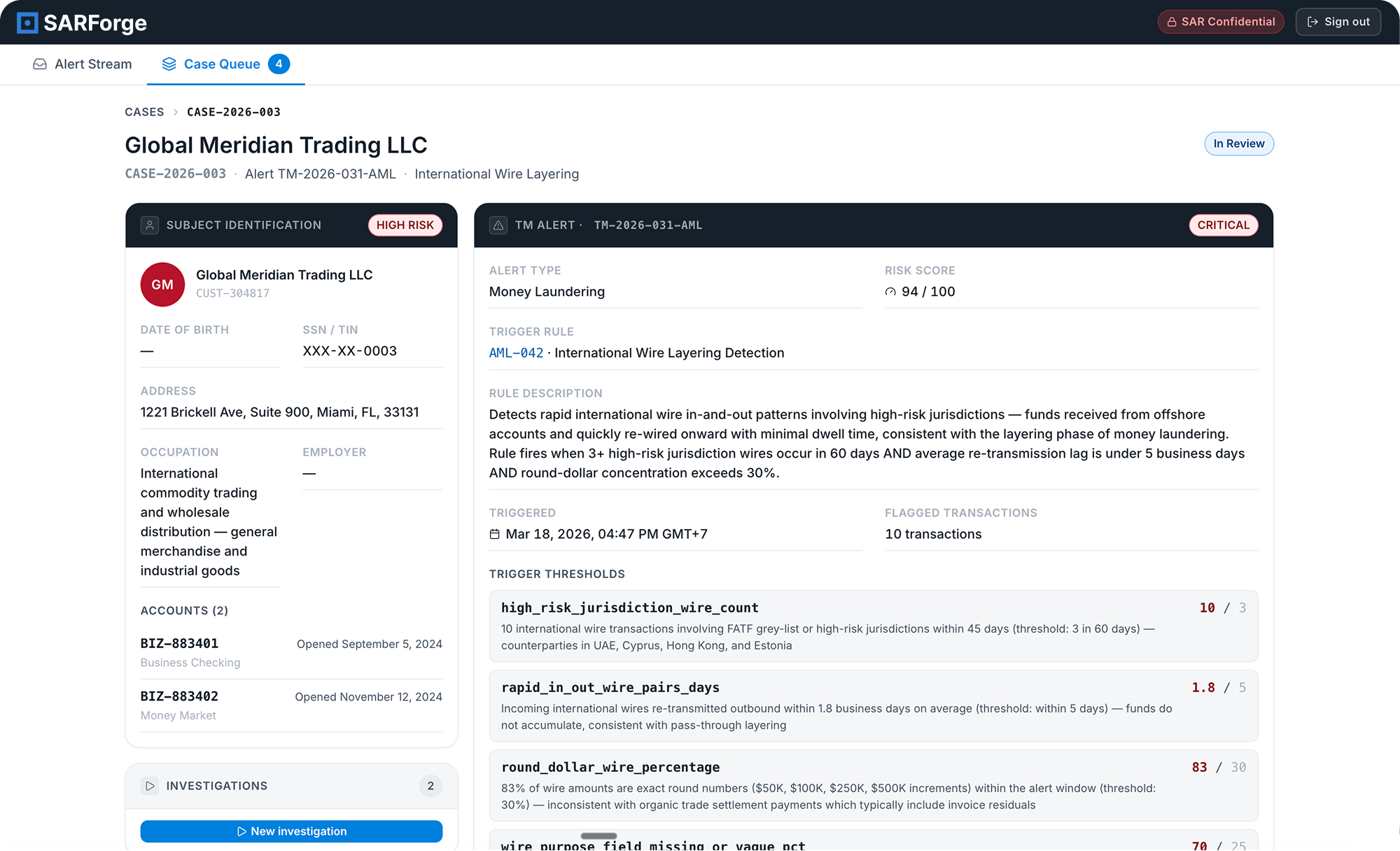
An analyst gathers transactions, KYC records, prior alerts, open-source checks and case notes from several systems, reconciles dates and amounts, and only then writes. The writing is short; the gathering and the checking are not.
How does SARForge turn an alert into a reviewer-ready SAR package?
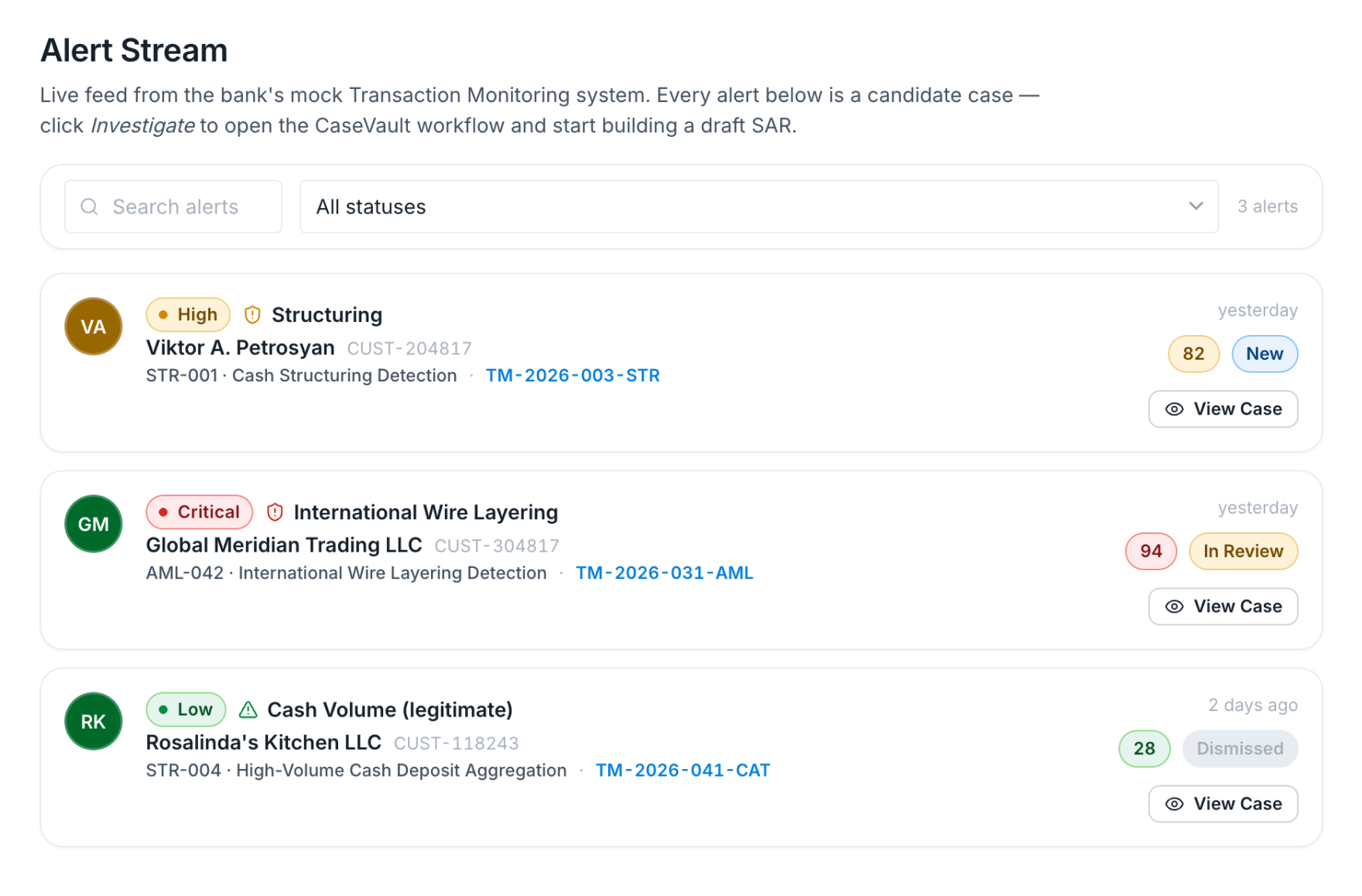
SARForge runs on the MightyBot platform. It assembles the case from your alert, transaction, KYC and document systems, extracts the facts the narrative needs with a pointer to the source of each, and detects the typology the activity fits. The narrative is drafted to answer who, what, when, where, why and how, in the order FinCEN describes, with each statement mapped to its evidence.
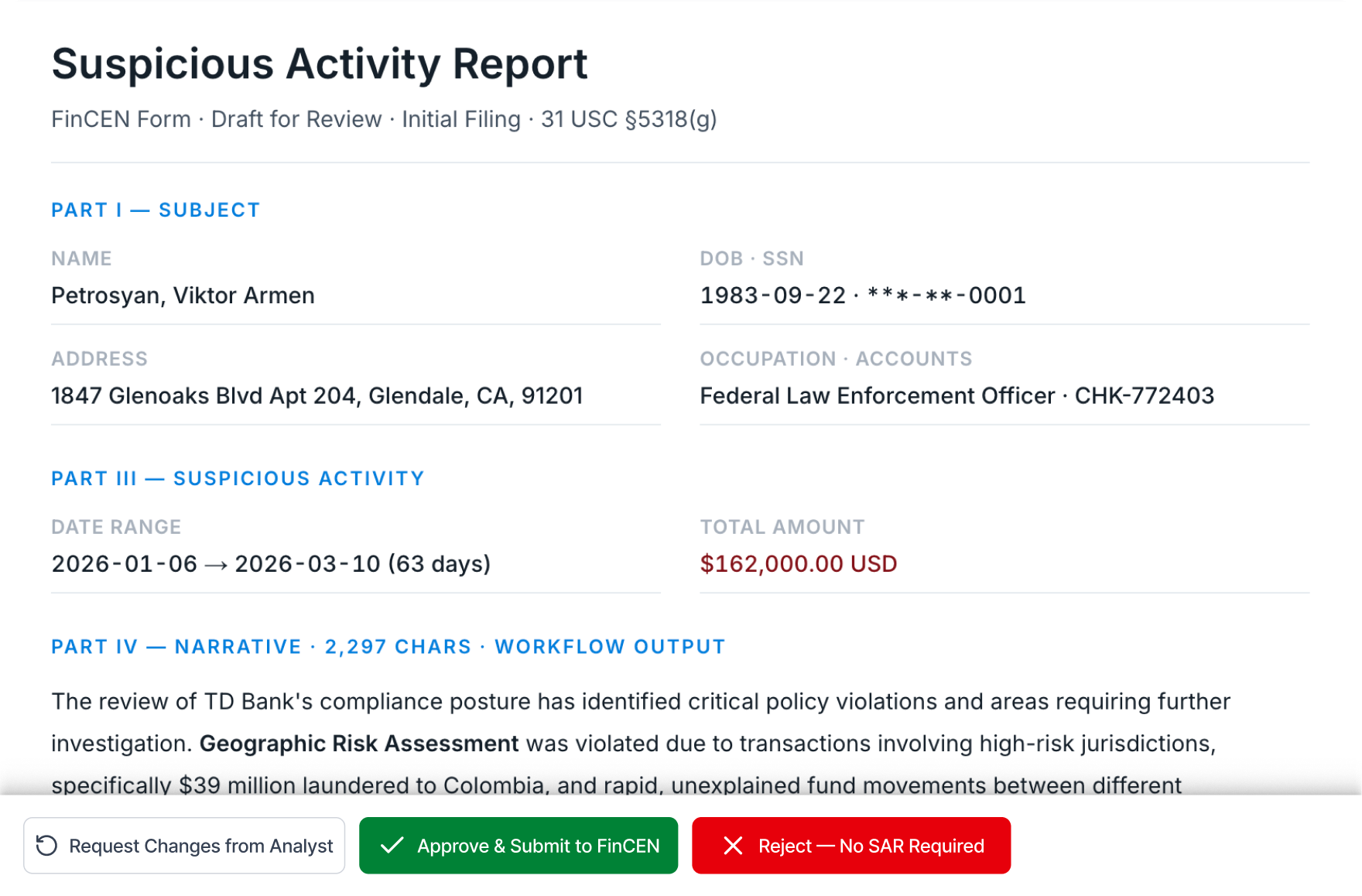
The package includes the FinCEN form fields, the narrative, QA checks against the common-error list, and workpapers that show the analyst and reviewer what was used. The BSA officer or analyst reviews and decides; nothing is filed without that sign-off.
Because the filing deadline runs from initial detection, the case keeps its clock. Decisions not to file can be recorded in the same place, with the reasoning attached, at the level your policy sets.
What do regulators say about documentation and decisions not to file?
The October 2025 interagency SAR FAQs answer a common question directly: "There is no requirement or expectation under the BSA or its implementing regulations for a financial institution to document its decision not to file a SAR." They add that "FinCEN has previously encouraged, but not required, financial institutions to document the decision not to file a SAR," and that where an institution chooses to, the level of documentation should follow its own risk-based policies.
Confidentiality is absolute for the filing itself. A SAR and "any information that would reveal the existence of a SAR, are confidential and shall not be disclosed except as authorized." A drafting tool has to respect that: access controls on the case, no SAR references in customer communications, and a record of who viewed what.
Supporting documentation "shall be identified, and maintained by the bank as such, and shall be deemed to have been filed with the SAR," which is why the package matters as much as the form. A narrative with each statement linked to its evidence is the workpaper file examiners ask for.