What makes document processing in regulated work different from ordinary OCR?
In a lending, insurance or compliance workflow the extracted value becomes an input to a decision someone must defend. A number in a spread, a date on a lien waiver or a diagnosis code in a chart has to be traceable to the page it came from, and the person who changed it has to be known.
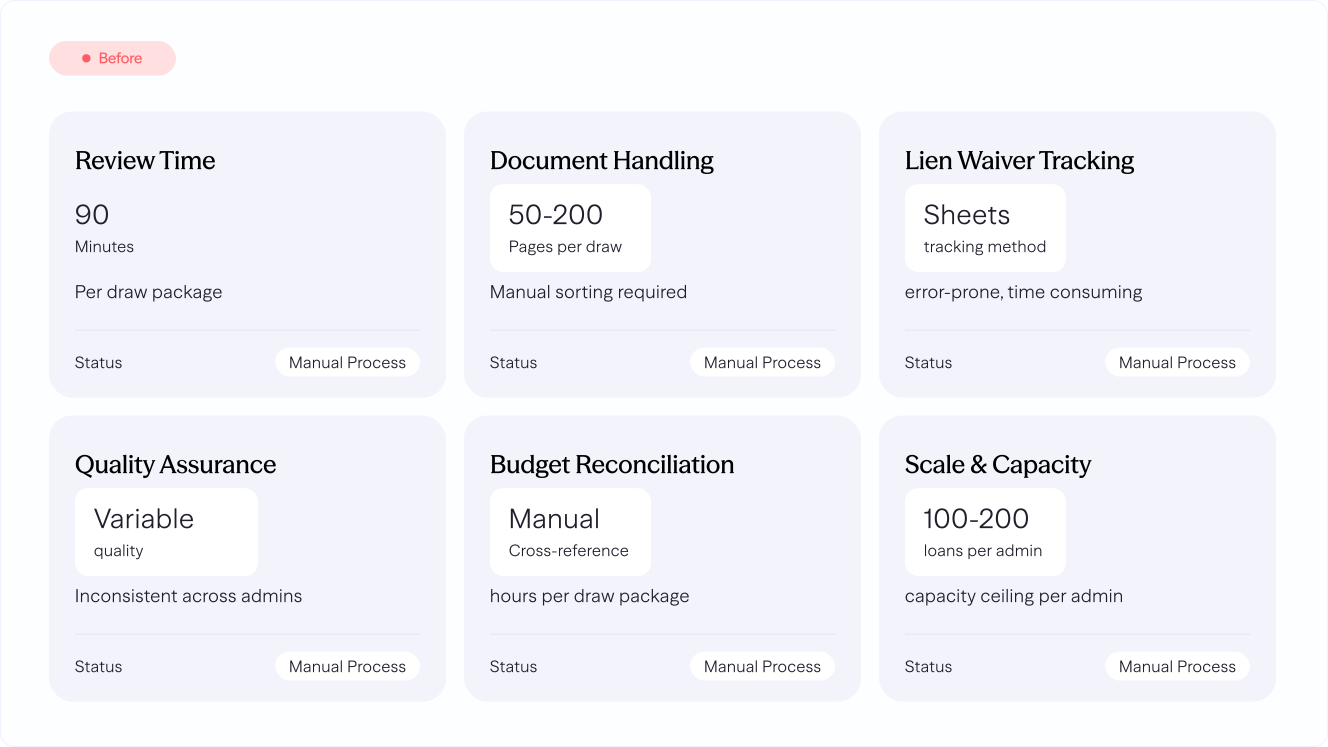
The documents are also worse than the demos. Packages mix native PDFs, scans, photos and spreadsheets; a single file can contain several document types; the same fact appears in different places with different values; and layouts change whenever a borrower, contractor or provider changes systems.
Templates break under that variety. What holds up is classifying each page first, extracting by meaning, normalizing to one schema, and reconciling the same fact across documents, with a confidence score and a source pointer on every value.
How does the MightyBot document pipeline work?
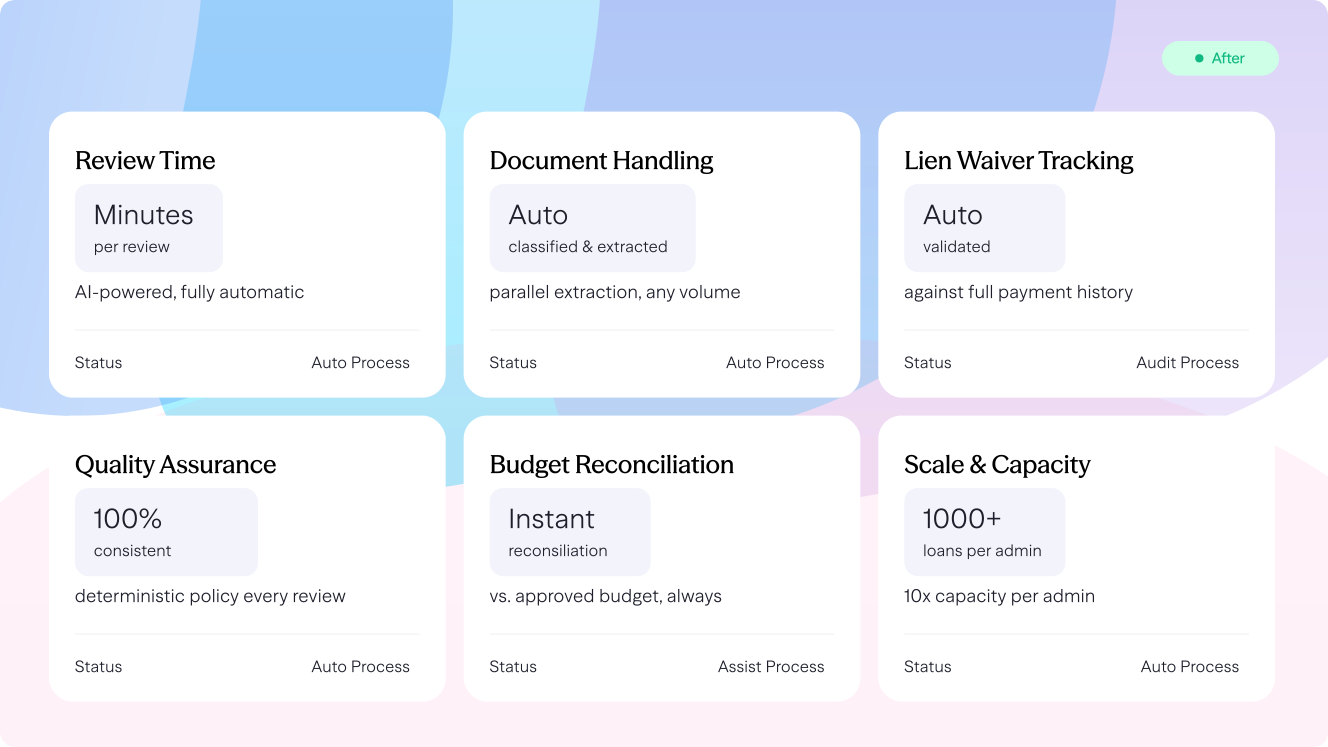
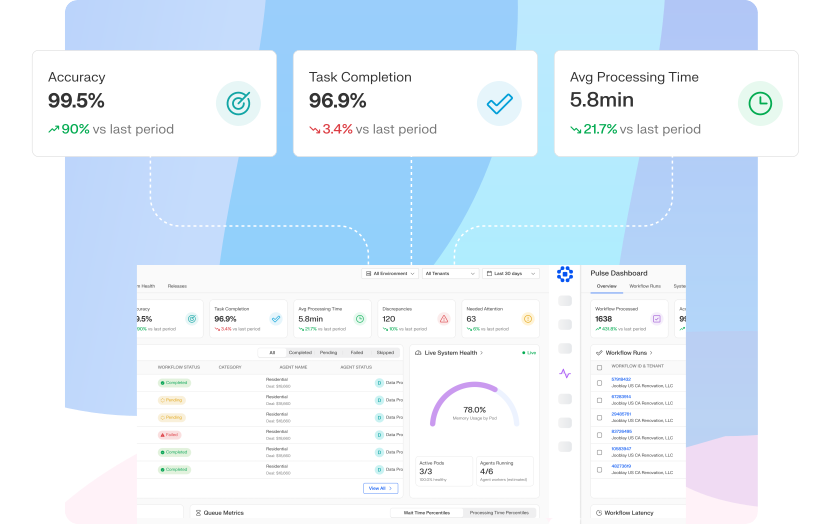
The pipeline runs in stages: classify each page and split mixed files; extract the fields your workflow needs; normalize values to your schema and units; reconcile the same fact across documents and flag disagreements; then recompose the result for the policy step that consumes it. Each value carries the document, page and position it came from, and a confidence signal.
Low-confidence values and conflicts route to a person, and the review is recorded with the value. Photos and video are handled as evidence in the same way, which matters for inspections and claims.
Because the output is a canonical record rather than a pile of extracted strings, the same pipeline feeds spreading, draw reviews, medical necessity review and policy evaluation without re-extraction.
What do regulators and standards say about provenance and records?
NIST's AI Risk Management Framework notes that "Documentation can enhance transparency, improve human review processes, and bolster accountability in AI system teams," and its Generative AI Profile calls for records that promote content provenance, "including sources, timestamps, metadata."
Where the extracted values feed regulated records, the record-keeping rules apply to them. The SEC's Rule 17a-4 requires electronic records to be kept in a manner that "maintains a complete time-stamped audit trail" of modifications, or in a "non-rewriteable, non-erasable format." NIST SP 800-53 control AU-3 requires audit records that establish "What type of event occurred," when and where, its source and outcome, and the identity of anyone associated with it.
The April 2026 interagency model risk guidance says "Generative AI and agentic AI models are novel and rapidly evolving. As such, they are not within the scope of this guidance." Until regulators say more, the practical standard for an extraction step is the same one auditors already apply to any input: show where it came from and who touched it.