
Regulatory Requirements as Executable Rules
Regulations authored in plain English by your compliance team. Compiled into deterministic evaluation paths. Not tracked. Enforced.
Regulatory compliance monitoring automation evaluates a financial institution's transactions, documents and workflow events continuously against the rules that bind it: lending regulations, AML and sanctions requirements, consumer protection rules and internal credit policy. On MightyBot those requirements are written as executable policies, every transaction is evaluated rather than sampled, and each result keeps the rule version, the inputs and the evidence for examiners. This is regulatory surveillance for banks, lenders and payments firms. It is a different job from SOC 2 or IT security compliance automation.
Financial services firms operate under expanding regulatory requirements — federal, state, industry, internal. Manual compliance is reactive. Teams review transaction samples periodically. Violations surface during audits or exams after months of non-compliance. The gap between occurrence and detection creates compounding risk. Documentation is equally broken — teams spend enormous time pulling records from multiple systems and reconstructing rationale.
Periodic reviews catch only a fraction of issues
Months between occurrence and discovery
Evidence assembly consumes resources meant for risk management
Overlapping federal, state, and internal requirements
FinCEN, CFPB, and state-level requirements evolving faster than manual processes can adapt
Compliance data scattered across systems
Regulations authored in plain English by your compliance team. Compiled into deterministic evaluation paths. Not tracked. Enforced.
Every transaction evaluated against applicable rules. Not sampling. Not quarterly reviews. Violations detected when they occur. Emerging risk patterns surfaced before they become violations.
Every evaluation produces a decision trace: requirement, data, determination, evidence. Decision traces that satisfy examiners and hold up in litigation. When a regulator asks, the answer is a verifiable record. Generated automatically.
Reports generated from continuous monitoring data. Exception reports, trend analyses, exam prep materials. Exports to S3, Snowflake, or Iceberg. Git-native versioning tracks every policy change — who, when, and why.
Every determination traced to policy version, data values, and source documents. When FinCEN examiners ask, the answer is a verifiable record. Not a reconstruction.
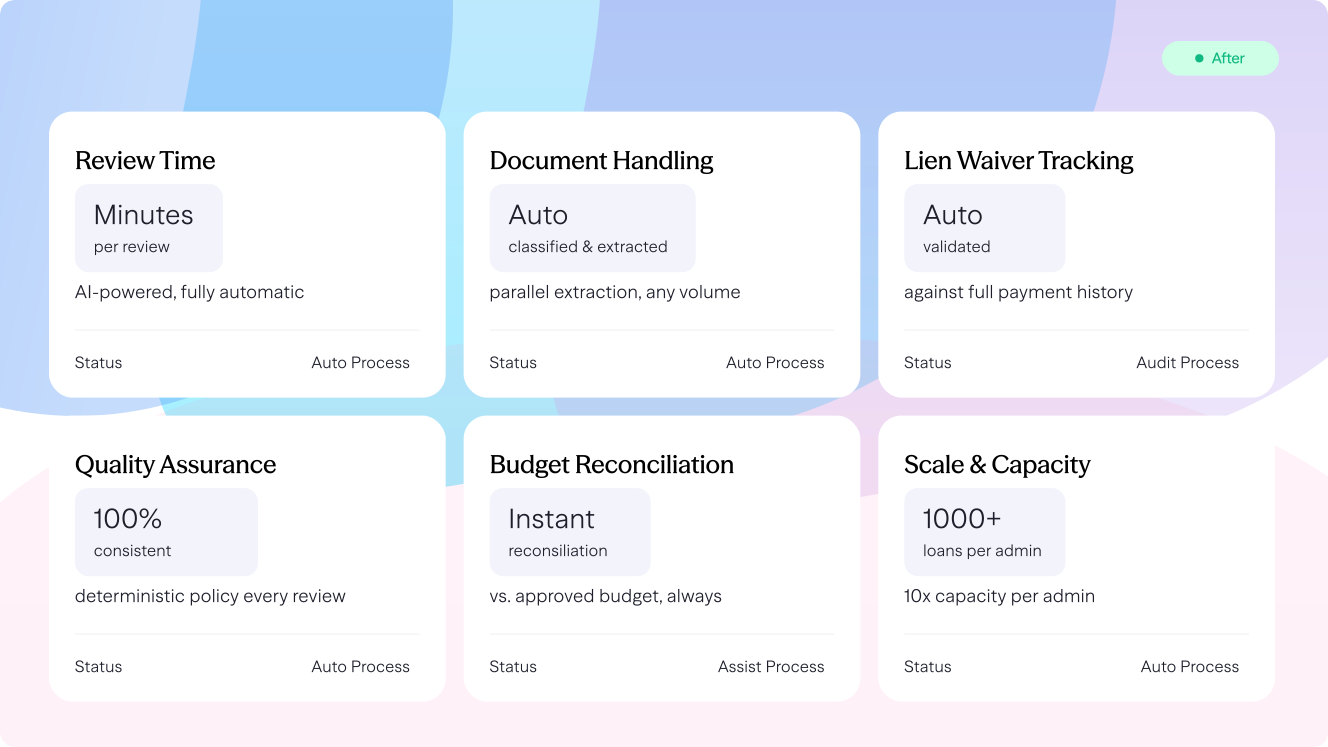
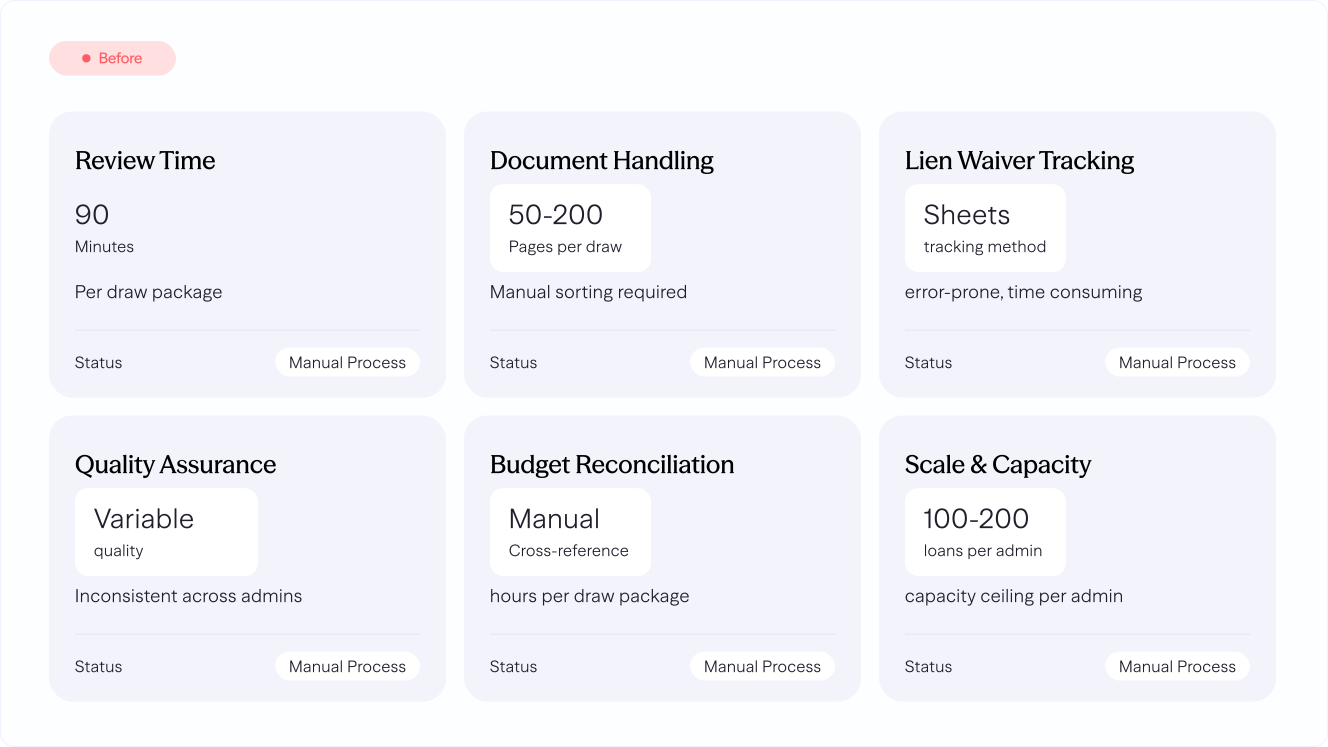
Use-case map
MightyBot automates regulatory compliance monitoring for financial institutions by encoding banking, lending and AML requirements as executable rules, evaluating activity continuously, and producing audit-ready evidence trails for examiners.
| Inputs | Transactions, documents, workflow events, regulatory requirements, internal policies, exception logs, and system-of-record data. |
|---|---|
| Execution | Evaluates activity against versioned rules continuously, detects violations, routes exceptions, and exports decision records. |
| Outputs | Compliance alerts, audit trails, regulatory reports, exception queues, and S3, Snowflake, or Iceberg exports. |
| Audit trail | Every evaluation records the rule version, input data, source system, timestamp, outcome, and human review actions. |
| Best for | Financial services teams that need continuous surveillance instead of sampled review and after-the-fact audit reconstruction. |
FAQ
Your compliance team updates plain English rules. Git-native versioning records every change with author, timestamp, and rationale. Transactions immediately evaluated against updated rules.
The Policy Engine evaluates against all applicable requirements - federal, state, internal - in a single pass. Different frameworks maintained independently. Enforced concurrently.
Periodic reports, exception reports, trend analyses, exam prep materials. Formatted for regulatory submissions. Exports to S3, Snowflake, or Iceberg.
No. Results flow into your GRC via APIs. Your GRC tracks obligations. MightyBot enforces them.
Ambiguous cases routed to the appropriate reviewer with full context - the exception, applicable rule, data evaluated, and evidence trail. The reviewer makes an informed decision. No re-investigation required.
A machine-generated record for every evaluation: rule, data, result, evidence location. The primary audit artifact. Regulators verify any determination without reconstruction.
The April 2026 FinCEN proposal expands beneficial ownership and AI monitoring requirements. MightyBot generates audit trails from day one: every AML determination traced to policy version, data inputs, and source documents. When examiners ask how AI-assisted decisions were made, the answer is a verifiable record.


