Industries
Insurance Claims Automation with AI Agents
Claims adjudication, medical necessity review, and policy evaluation, executed under your policies with evidence on every decision. Productivity you can show a regulator.
What is insurance claims automation?
Insurance operations run on documents and policy language: claims files, medical records, policy terms, and the rules that connect them. MightyBot gives insurance teams AI agents for that work: claims processing, medical necessity review, and policy evaluation, each with evidence pointers an auditor or regulator can follow.
The Workflows No One Else Can Solve
This is not claims triage. These are real insurance decisions made with the full policy, supporting evidence, and regulatory context in view.
-
Claims Adjudication
Full claim file ingested -- FNOL, medical records, repair estimates, policy declarations. Evaluated against coverage terms, exclusions, sub-limits. Simple claims end-to-end. Complex claims routed with analysis complete.
-
Medical Necessity Review
Clinical documentation cross-referenced against coverage terms, evidence-based guidelines, and state mandates. Structured determinations with citations. Cases exceeding thresholds route to clinical staff with preliminary analysis complete.
-
State-by-State Compliance
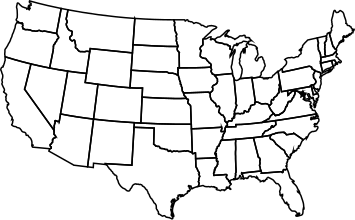
States have adopted NAIC AI model guidance, and several have enacted new AI rules. All are managed as enforceable policies. When regulations change, policies update in plain English.
-
Document Intelligence
EOBs, medical records, police reports, repair estimates -- dozens of document types classified, extracted, and indexed automatically.


How MightyBot
Executes
-
Native Connectivity
Operates inside your claims management platform and policy administration system. End-to-end execution. No rip-and-replace.
-
Human Oversight Compliance
Florida HB 527 and Arizona HB 2175 require human review for claim denials. Confidence thresholds route uncertain decisions to licensed reviewers with full context. Every decision includes a why-trail that satisfies discovery requirements.
-
Parallel Policy Evaluation
Coverage, liability, and compliance analyzed in parallel. Execution plans run independent checks together.

Measured in MightyBot production deployments.
Production Results
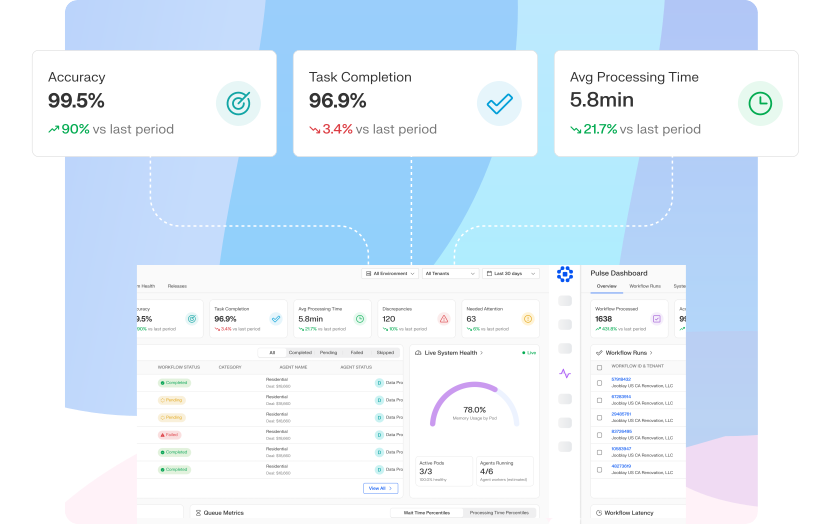
They solve easy workflows. We solve hard ones.
Use Cases
-
Claims Processing & Adjudication
End-to-end evaluation with citations
-
Medical Necessity Review
Clinical documentation against coverage criteria
-
Intelligent Document Processing
Classification across every insurance document type
-
Policy Evaluation & Enforcement
Carrier, state, and regulatory rules enforced
-
Compliance Monitoring & Reporting
Continuous compliance. Audit-ready exports
Industry workflow map
How insurance claims automation works in MightyBot
MightyBot automates insurance claims, medical necessity review, policy evaluation, and compliance workflows by applying carrier rules and regulatory policies to source evidence with human-review controls.
Last updated: October 4, 2026| Inputs | Claim files, FNOL, medical records, policy declarations, coverage terms, exclusions, repair estimates, EOBs, and state rules. |
|---|---|
| Execution | Agents classify evidence, evaluate coverage and necessity, apply state and carrier rules, identify missing support, and route denials or uncertain cases. |
| Outputs | Claim findings, medical-necessity summaries, coverage determinations, compliance flags, evidence packets, and reviewer queues. |
| Audit trail | Each recommendation records source evidence, coverage terms, policy rules, jurisdictional requirements, confidence thresholds, and reviewer decisions. |
| Best for | Insurance teams that need faster claims and review throughput while preserving explainability, compliance, and human oversight. |
See claims adjudication in production.
Real claims, real policies, real compliance. Not a demo. In production.
FAQ
Frequently Asked Questions
What can AI agents do in insurance operations?
The high-volume review work: processing claims files end to end, checking medical necessity against clinical criteria, and evaluating cases against policy terms. Adjusters and reviewers keep decision authority; agents do the assembly, extraction, and first-pass evaluation with evidence attached.
How does MightyBot handle state-by-state regulatory variation?
Each state's requirements are individual policies in plain English: timely filing, mandatory disclosures, claim handling standards. When regulations update, policies change without code. Every claim evaluated against applicable state requirements.
Can MightyBot process medical records for necessity review?
Medical records in all formats: PDFs, scans, digital health records. Diagnoses, procedures, and findings extracted and mapped against criteria and coverage terms. Cases exceeding thresholds route to clinical reviewers with analysis complete.
How does MightyBot ensure fair claims handling?
Every decision includes a why-trail: policies evaluated, data referenced, reasoning chain. Available to claimants, adjusters, compliance, and regulators. Same policies applied consistently. No variability.
What happens with edge cases?
Edge cases handled. Confidence thresholds route uncertain decisions to qualified reviewers with full context and specific escalation reasons. Reviewers decide in minutes, not hours.
How does MightyBot handle NAIC compliance?
NAIC model laws and state implementations are enforceable rules in the policy library. Market conduct standards, unfair claims practices, prompt pay statutes evaluated automatically. Audit exports formatted for regulatory examination.
What lines of business does MightyBot support?
Any line governed by documented rules: property, casualty, health, workers' comp, specialty. Policies customized per carrier and line. New lines added by defining policies in plain English.