
Use Cases

Merchant Statement Analysis Automation

MightyBot automates merchant statement analysis: every fee, every rate, every processor format. Analysis that took hours now takes minutes, and deals close faster.

What is merchant statement analysis?

Merchant statement analysis is the line-by-line review of a payment processor's monthly statement to identify every fee, effective rate, and interchange markup a merchant is paying. MightyBot runs the analysis end to end across processor formats, producing a savings comparison with an evidence pointer on every number.

Automate Merchant Statement Analysis

Processor consolidation, new fee categories, regulatory scrutiny of interchange: the landscape shifts constantly. A single statement contains hundreds of line items across interchange fees, assessments, markups, PCI fees, batch fees, charges varying by card type and volume tier. MightyBot adapts without manual reconfiguration. Parses every format, extracts every fee, benchmarks rates, quantifies savings in minutes.

The Problem

Statement analysis is the critical first step in every ISO sales engagement. A rep must identify effective rates, isolate markups from pass-through costs, find hidden fees, and calculate savings. This takes 30-60 minutes per statement. The bottleneck kills sales velocity — every queued statement is a merchant waiting. Rush it and miss fees. Take your time and lose the deal. Hiring alone cannot break the ceiling.

Format chaos

First Data, WorldPay, TSYS, Heartland, Stripe: all different, and they change without warning.

Industry consolidation

Acquirer mergers and platform changes mean statement formats evolve constantly. What worked last quarter may not parse today.

Fee complexity

Hundreds of line items across interchange, assessments, markups, and ancillary charges.

Context dependence

A "processing fee" means something different in every format.

Accuracy stakes

Over-promised savings erode trust and kill deals.

Volume ceiling

Reps limited to 5-10 manual analyses per day.

How MightyBot Executes

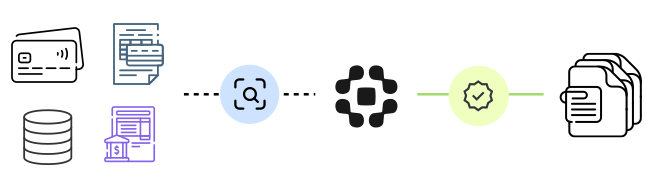
  1. Classify processor format

    First Data, WorldPay, TSYS, Heartland, Square, Stripe, hundreds more. FRS canonicalization maps fee labels to canonical categories. New format? Configuration, not code.

  2. Extract fee lines

    Every category, rate, and transaction count. Interchange by card type. Assessments. Markups. Monthly, PCI, batch, chargeback fees.

  3. Normalize to fee taxonomy

    Markups isolated from pass-through costs. Hidden fees identified. Regulatory compliance verification: disclosed rates matched against actual charges per Durbin and card network rules.

  4. Compute effective rate

    Effective rate, markup percentage, savings under proposed structures. Evidence pointers to the source statement.

  5. Generate savings comparison

    Evidence-backed savings that hold up when merchants ask "show me."

  • Interchange
  • Assessments
  • Processor markup
  • PCI and statement fees

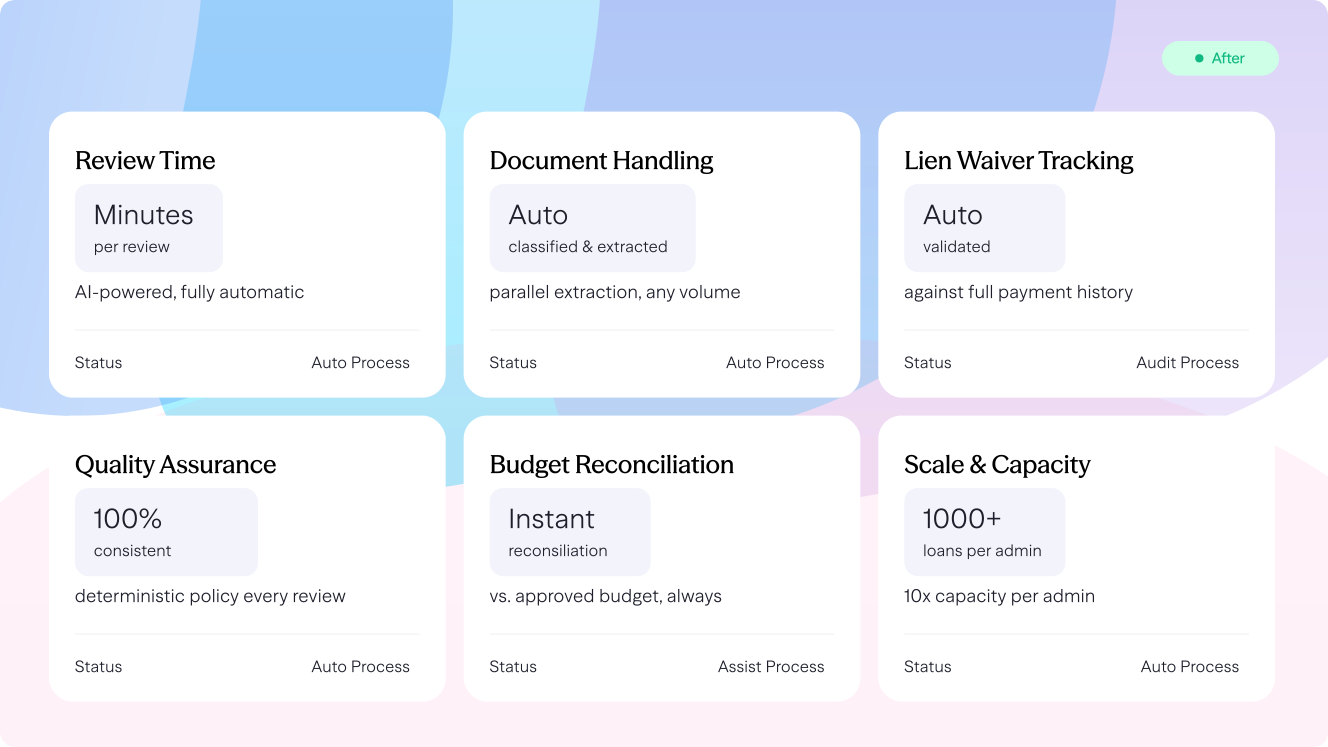
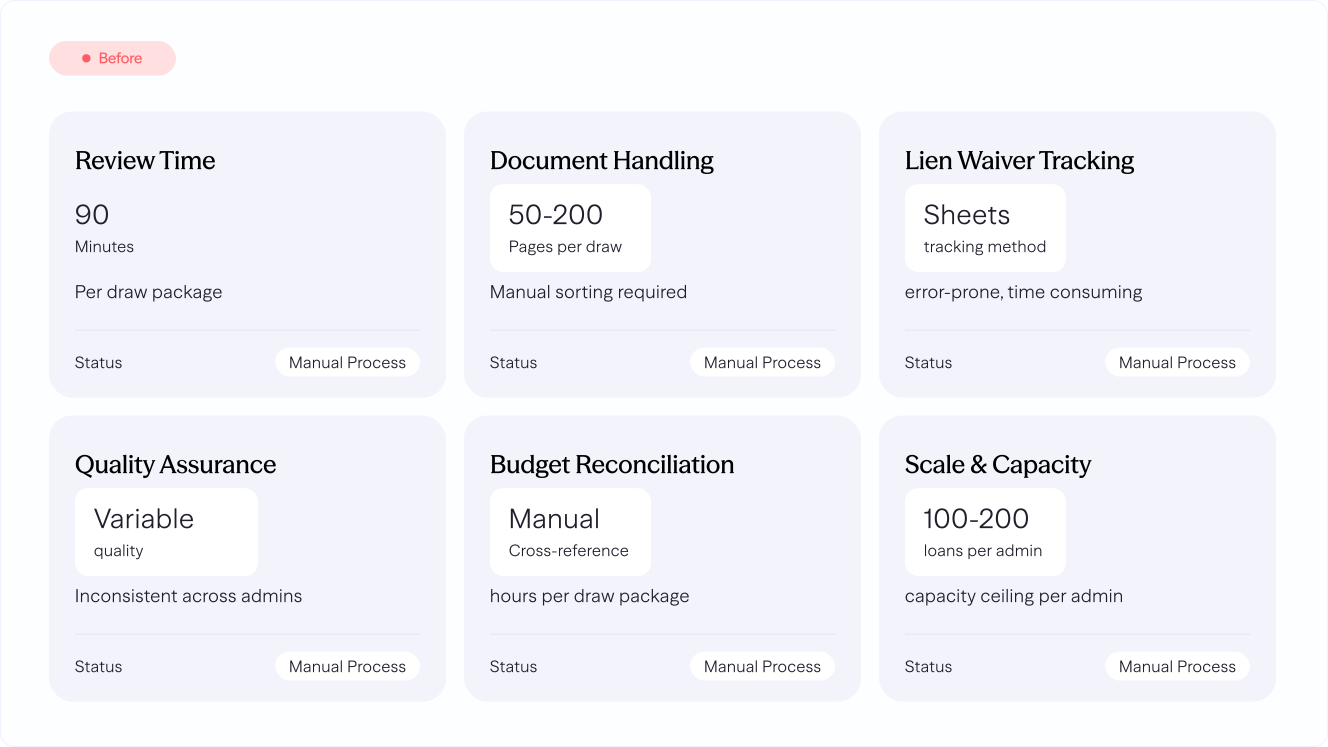
Before vs After

After Before

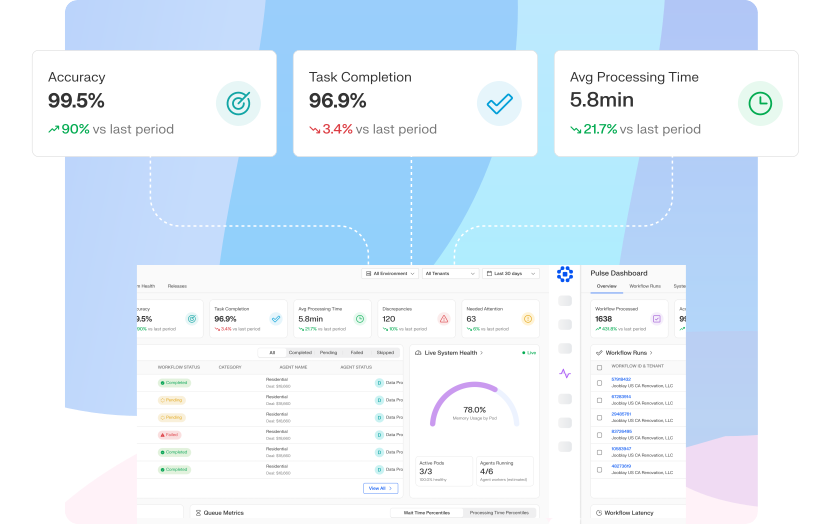
Production Metrics

Proven in production with RocketFee, a payments technology company embedding MightyBot's Data Engine for automated statement analysis. Measured in the RocketFee production deployment. See the PayGuard agent for the adjacent payments workflow.

70% Faster analysis cycle time
4-5x More statements processed per rep per day
99%+ Accuracy on fee extraction across major formats
Same-day Proposals with backlog eliminated

Analysis that took hours. Now takes minutes. Proven with RocketFee.

Use-case map

How Merchant Statement Analysis Automation works in MightyBot

MightyBot automates merchant statement analysis by parsing processor formats, extracting fees and rates, benchmarking markups, quantifying savings, and producing source-backed analysis.

Inputs Merchant statements, processor fee tables, card mix, transaction volumes, proposed pricing, interchange categories, and rate disclosures.
Execution Parses statement formats, extracts every fee and rate, separates pass-through costs from markups, benchmarks pricing, and calculates savings.
Outputs Savings analyses, effective rate summaries, fee breakdowns, sales-ready proposals, and evidence-backed pricing comparisons.
Audit trail Every fee, rate, transaction count, and savings claim links back to the source statement and calculation logic.
Best for Payments teams where manual statement analysis slows sales velocity and weak evidence undermines merchant trust.

FAQ

Frequently Asked Questions

How many processor formats does MightyBot support?

All major processors — First Data, WorldPay, TSYS, Heartland, Global Payments, Square, Stripe, and hundreds more. The pipeline adapts to new formats through classification and canonicalization. No rigid templates.

Can MightyBot calculate savings under a proposed rate structure?

Fees extracted and categorized. Savings modeled under interchange-plus, tiered, or flat-rate structures. Pass-through costs isolated from markups. Projections reflect actual margin reduction.

How accurate is the fee extraction?

95%+ in production. Every value includes an evidence pointer to the source location. In practice, more accurate than manual analysis by experienced analysts.

What is merchant statement analysis?

Merchant statement analysis is the review of a merchant's monthly processing statement to break out interchange, assessments, and processor markup, and to compute the effective rate actually paid. It is how payments providers quantify the savings they can offer a prospect.

How does AI automate payment processing statement analysis?

AI agents classify the statement's processor format, extract every fee line and volume figure, normalize them into a standard fee taxonomy, and compute effective rates and savings scenarios. Statements that took an analyst hours are processed in minutes, with each figure traceable to the exact line on the source PDF.

How does MightyBot handle different pricing models?

Interchange-plus, tiered, flat-rate, hybrid — all recognized and correctly parsed. Interchange isolated from markup. The canonical schema normalizes all structures for consistent comparison.