How does covenant testing work, and where does manual tracking break?
A credit agreement sets financial covenants such as minimum debt service coverage, maximum leverage and minimum liquidity, plus reporting covenants that say which statements the borrower owes and when. Each period the borrower delivers financials and a compliance certificate. The lender recalculates every ratio using the definitions in that agreement and compares the result to the threshold in force for that period.
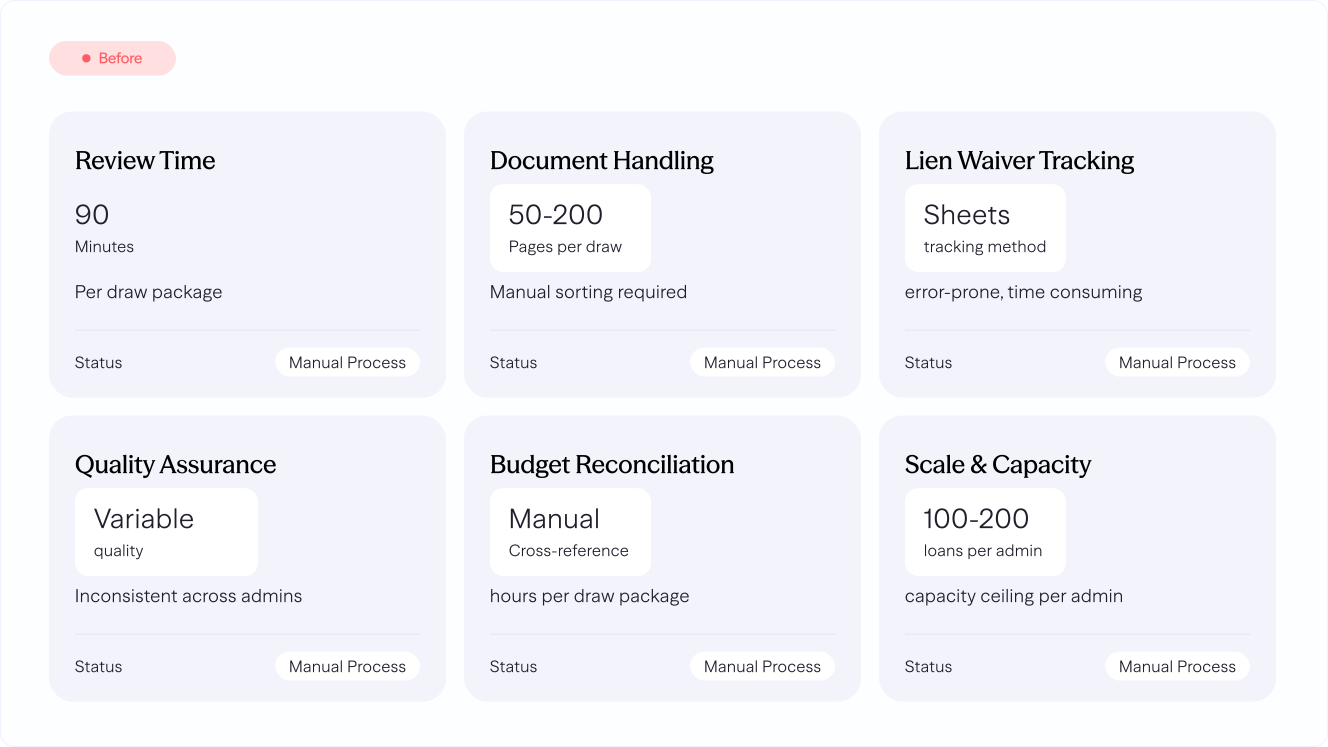
The work breaks in predictable places. EBITDA, debt and fixed charges are defined differently in every agreement, so one formula never fits the portfolio. Thresholds step down over time and change again with each amendment. Statements arrive as PDFs, scans and spreadsheets in each borrower's own layout. A late package looks the same in a tracker as a package nobody has opened.
The result is that testing runs on the analyst's calendar. A ratio that slipped in March gets read in June, and headroom, the distance between the actual ratio and the threshold, is rarely tracked at all.
How do AI agents calculate covenants and headroom automatically?
On MightyBot, each loan's covenants are written as plain-English policies that carry that agreement's definitions, thresholds, step-downs, cure periods and reporting dates. The platform compiles those policies into an execution plan, so the same test runs the same way every period.
When a borrower package arrives, agents classify the documents, extract the line items and normalize them to one schema. Each extracted value keeps a pointer to the page and position it came from. The agent calculates every covenant ratio, measures headroom against the current threshold, and compares the trend with prior periods.
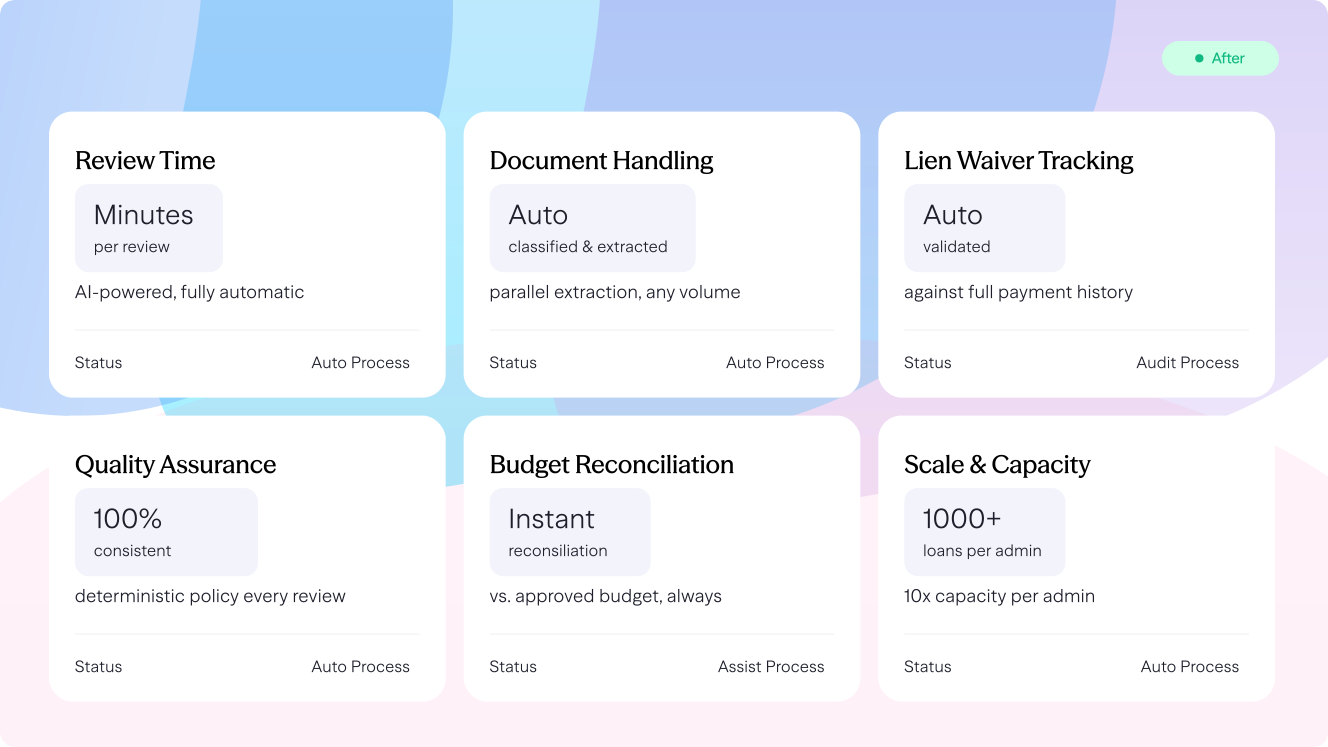
A breach, a shrinking cushion or a missed reporting date raises an alert that names the covenant, the calculated value, the threshold and the source documents. Teams usually start in audit mode, where agents run the tests and analysts decide, then move clean cases to straight-through handling as results hold up. At Built Technologies, the same document and policy pipeline runs construction draw reviews in production.
What do examiners and investment committees expect to see?
Bank examiners look at the process as well as the result. The OCC's Commercial Loans handbook directs examiners to consider the bank's systems for "monitoring compliance with loan covenants," its practices for "receiving and analyzing timely financial data," and how it checks "the ongoing accuracy and reliability of borrower certifications." The OCC's July 2026 Lending and Loan Portfolio Risk Management booklet lists "loan covenant testing" among loan administration functions and counts "Covenant breaches (even if waived)" as financial exceptions a bank should track.
The OCC's Rating Credit Risk handbook says effective covenants give the bank "an opportunity to trigger protective action" when the borrower's condition "falls below prescribed standards," and tells examiners to "be alert for covenants that have been waived or renegotiated." The FDIC's examination manual lists "Adherence to loan covenants" among the credit factors a loan review analyzes.
For a credit fund, the investment committee and LPs ask the same question in different words. They want to see each test, the inputs behind it, who reviewed it, and what happened after a waiver. A record with timestamps, source links and the policy version answers all of them from one place.