What does a CRE lender pull from a deal package, and why is it slow?
An income-property loan is underwritten from the rent roll, trailing operating statements, leases, the appraisal, the offering memorandum, and sponsor and guarantor financials. From those the analyst builds net operating income, then the ratios that size the loan.
The OCC's Commercial Real Estate Lending handbook defines the two that matter most. "The DSCR, calculated by dividing the NOI by the annual debt service requirements, measures the borrower's ability to service its debt." And "Debt yield is the ratio of NOI to debt." Loan-to-value comes from the appraisal.
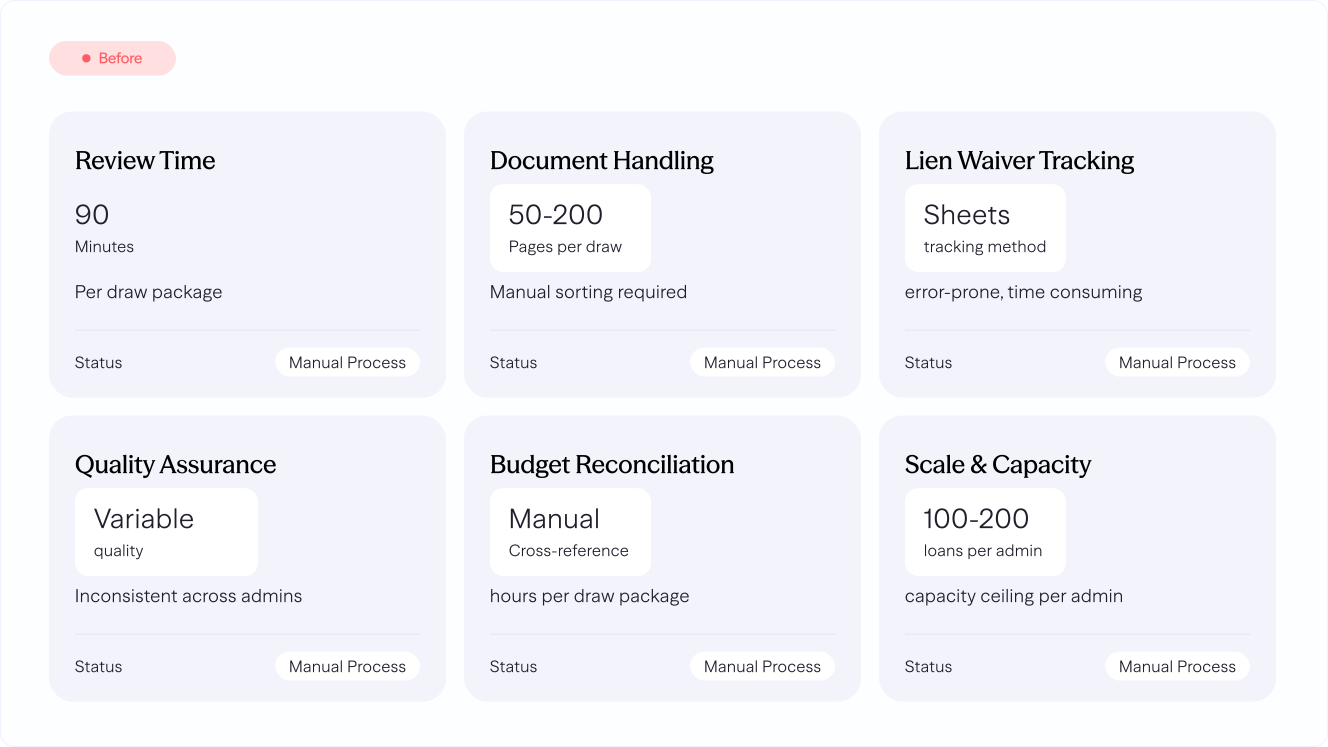
The slow part is the reading. Every property manager exports a different rent roll. A multifamily unit mix looks nothing like an office lease schedule with expirations, options and reimbursements. Operating statements bury one-time items in line items with no standard names. Analysts spend the hours on transcription and have little left for judgment.
Can AI calculate DSCR, LTV and debt yield once the financials are extracted?
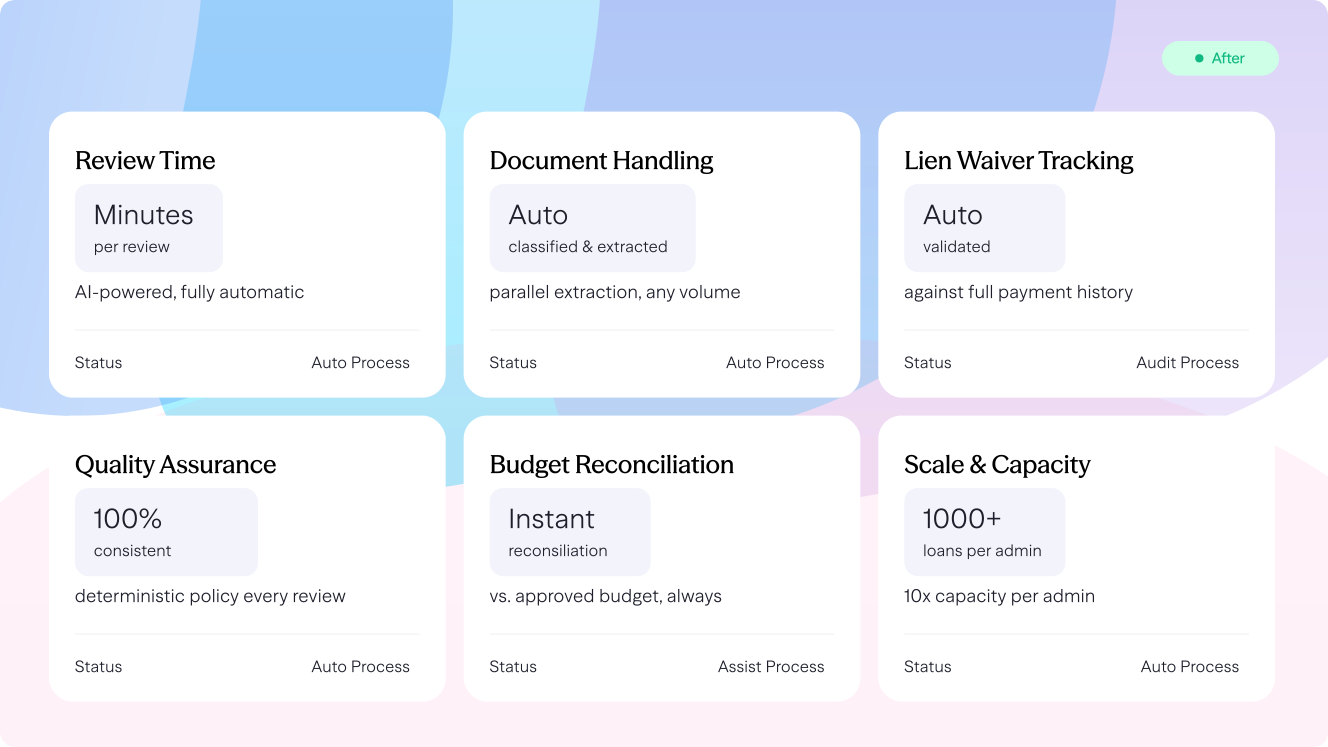
Yes, provided the calculation follows your credit policy and each input can be traced. On MightyBot, agents classify the package, extract rent roll rows and operating statement lines, and normalize them to one schema. Every value keeps a pointer to the page it came from.
Your underwriting standards are written as plain-English policies, with profiles for each property type, so multifamily, industrial and office deals run under their own vacancy, expense and reserve assumptions. The agent computes NOI, DSCR, debt yield and LTV, applies your rate and vacancy stress cases, and sizes the loan to the tightest constraint.
Policy exceptions are flagged with the evidence attached. That includes the supervisory loan-to-value limits in the interagency real estate lending guidelines, which set 80 percent for commercial and multifamily construction, 85 percent for improved property, 75 percent for land development and 65 percent for raw land. The guidelines say loans above those limits should be identified in the institution's records and reported to the board at least quarterly.
What do examiners expect after the loan closes?
Monitoring carries as much weight as underwriting. The OCC handbook says loan covenants "should require the submission of periodic financial information pertaining to the project, borrowing entities, and guarantors," and that for stable properties "annual operating statements and rent rolls may be adequate," while lease-up properties or those with frequent lease expirations can warrant monthly or quarterly collection.
The handbook adds that the information collected "should be analyzed in a timely manner to assess financial performance, tenant rollover risk," and covenant compliance, and that DSCRs "should be stress-tested to determine whether a property will likely remain viable during a period of economic stress."
At portfolio level, the 2006 interagency guidance on CRE concentrations states that "A strong management information system (MIS) is key to effective portfolio management." It flags institutions for further supervisory analysis when construction and land loans reach 100 percent of total capital, or total CRE reaches 300 percent with 50 percent growth over 36 months. Reporting by property type, geography and LTV band has to come from the same data the underwriters used.