
S3
Decision records and audit trails in structured formats. Configurable frequency and scope.
AI agent compliance infrastructure must prove what an agent did, why it did it, and which policy and data controlled the outcome. MightyBot generates that proof as agents work: decision traces, regulatory-grade audit trails, human review gates, and exportable compliance records.
Audit trails are not optional. Every decision must be reconstructable. Every data point traceable. Every policy version documented.
"The AI decided" is not an acceptable answer to a regulator. They need to know which rule, what data, where it came from, and which policy version was in effect.
Most AI platforms log that a decision was made. MightyBot logs how and why, with evidence links that survive regulatory examination.
Regulated teams in commercial lending, insurance, and financial services can use the same evidence model.
Every row is production infrastructure. Shipping today.
These capabilities map execution evidence to the frameworks regulators and auditors use to evaluate controlled AI systems.
Every decision generates a complete trace: policy version, data values checked, evidence pointers to source documents, evaluation results, timestamps, final determination. Inside MightyBot it is called the why-trail. Not just what happened, but why.
When an auditor asks why a loan was approved, the trace produces the answer in seconds: decision to policy to extracted value to the pixel on the source document.
Define where human approval is required. The workflow pauses, presents the trace, and resumes after approval.
Clean applications proceed automatically. Edge cases route to reviewers with full context. Your team reviews the 5% that matter.
Who reviews what, under which conditions. Managed in the Policy Authoring Studio.
The platform measures how much reviewers change agent output. When edits approach zero, you have the evidence to raise autonomy. When they do not, you know exactly where the gaps are.
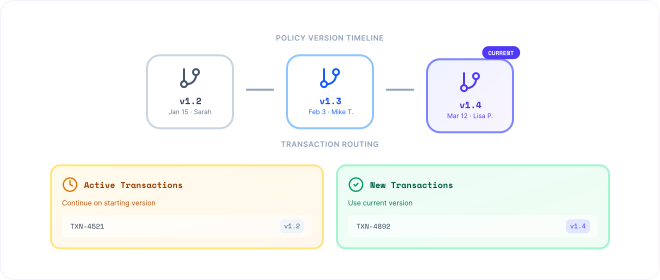
Every policy change creates a new version. Timestamped. Attributed. Active transactions continue under their starting version. New transactions use the current version. Workflow definitions versioned the same way.
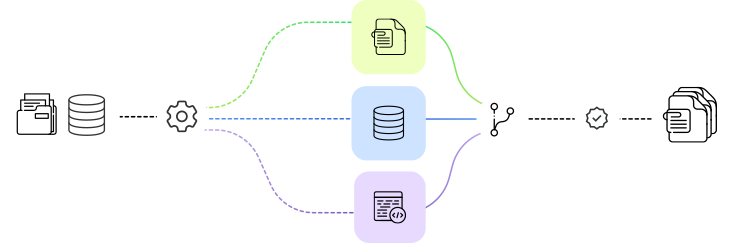
Ship workflows as versioned definitions in Git.
Decision records and audit trails in structured formats. Configurable frequency and scope.
Decision data lands in your warehouse for regulatory reporting and dashboards.
Schema evolution and time-travel for historical analysis across policy versions.
All exports checksummed and logged. Failed exports trigger alerts and retries.
Explore the stack
Which use case fits you
These are the workflows MightyBot runs in production today, each with a buyer's guide, regulator references and the evidence trail examiners ask for.
FAQ
A GRC tool documents controls after the fact. An AI agent compliance platform generates the evidence at execution time: every agent decision lands with its policy version, inputs, and evidence pointers attached, so the compliance record is a byproduct of the work rather than a quarterly assembly project.
Write the policy as the control, execute it deterministically, gate the exceptions to humans, and keep a replayable trail. Examiners get the same view the operations team had: what ran, under which policy version, on what evidence, with which overrides.
Policy version, data values, evidence pointers to source documents, evaluation results, timestamps, final determination, and human review actions. Every element is linked and reconstructable.
Compliance teams generate reports and export decision records via S3, Snowflake, and Iceberg. Direct access level depends on your organization's preferences.
In-flight transactions continue under their active version. New transactions pick up updates. Both preserved. No ambiguity.
Yes. Review gates and escalation policies are configurable per workflow, transaction type, dollar amount, risk level, or any policy-defined criteria.
Yes. Retention configurable per workflow and data type. Automated archival or deletion when periods expire. Retention policies themselves versioned and auditable.
Checksummed and logged. Failed exports trigger alerts and retries. Schema validation ensures data matches your target system.
Last updated: October 4, 2026