Use Cases

Medical Necessity Review Automation

MightyBot automates medical necessity reviews: clinical data extraction, guideline matching, code validation, and evidence-backed determinations that hold up in appeals and litigation. Minutes, not hours.

What is medical necessity review AI?

Medical necessity review AI automates the utilization-management check of a requested service against clinical criteria such as InterQual or MCG. Software agents extract clinical facts from the record, match them to the applicable criteria, validate ICD-10 and CPT codes, and draft an evidence-linked determination. Reviewers retain final authority; the agent performs the assembly and first-pass evaluation.

Automate Medical Necessity Reviews

Clinical reviewers should not spend hours reconstructing a case before they can even apply the guideline. MightyBot assembles the record, extracts the relevant data, evaluates the request against InterQual, MCG, or your internal criteria, and returns a fully cited recommendation with the source evidence already attached.

How MightyBot Executes

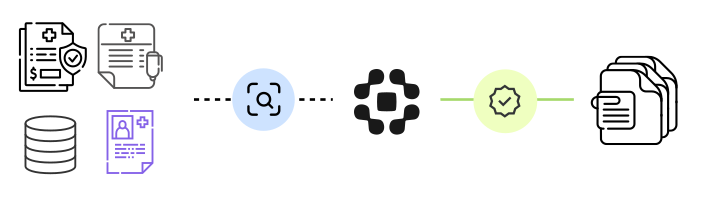
  1. Clinical data extraction

    Structured data is extracted from referrals, physician notes, labs, imaging reports, prior authorization packets, and discharge summaries. Clinical facts normalized regardless of source format.

  2. Guideline matching

    InterQual, MCG, or proprietary criteria as executable rules. Each request evaluated for the specific diagnosis, procedure, and care setting. Every branch, every threshold - deterministic.

  3. Automated code matching

    ICD-10 and procedure codes matched against approved treatment pathways. Documentation validated against reported diagnoses. Mismatches flagged with specific source evidence.

  4. Court-ready determinations

    Guideline criteria met or unmet, clinical data values, and exact source pages captured in the output. Evidence chains that satisfy auditors, examiners, and litigation discovery. Peer-to-peer escalations with full context already assembled.

The Problem

Manual utilization review creates a bottleneck at exactly the moment speed, consistency, and defensibility matter most. Reviewers jump across portals and PDFs, search for the right facts, interpret guideline branches, and rewrite the same rationale over and over. The cost is delay, inconsistency, and appeal risk.

Scattered clinical data

A single review spans referrals, physician notes, labs, imaging, prior auth forms, and discharge summaries: assembled by hand from disconnected portals.

Branching guideline logic

InterQual, MCG, and internal policies introduce nested decision trees that are difficult to apply consistently across hundreds of daily reviews.

Code validation

ICD-10 and CPT codes must align with documented clinical facts and approved treatment pathways. Mismatches surface late and delay determinations.

Appeal and litigation exposure

Denials without defensible evidence trails become liability in appeals, arbitration, and litigation. The 12-state insurance AI pilot expands transparency requirements.

Reviewer inconsistency

The same clinical scenario can produce different outcomes across reviewers. Inconsistency drives denials, appeals, and peer-to-peer escalations.

Regulatory pressure

Every determination must be traceable to a specific guideline branch and source document or it becomes a liability in audits and appeal proceedings.

CMS's Interoperability and Prior Authorization final rule (CMS-0057-F) tightens payer decision timelines through 2026 and 2027, which is pushing utilization-management teams toward automated first-pass review.

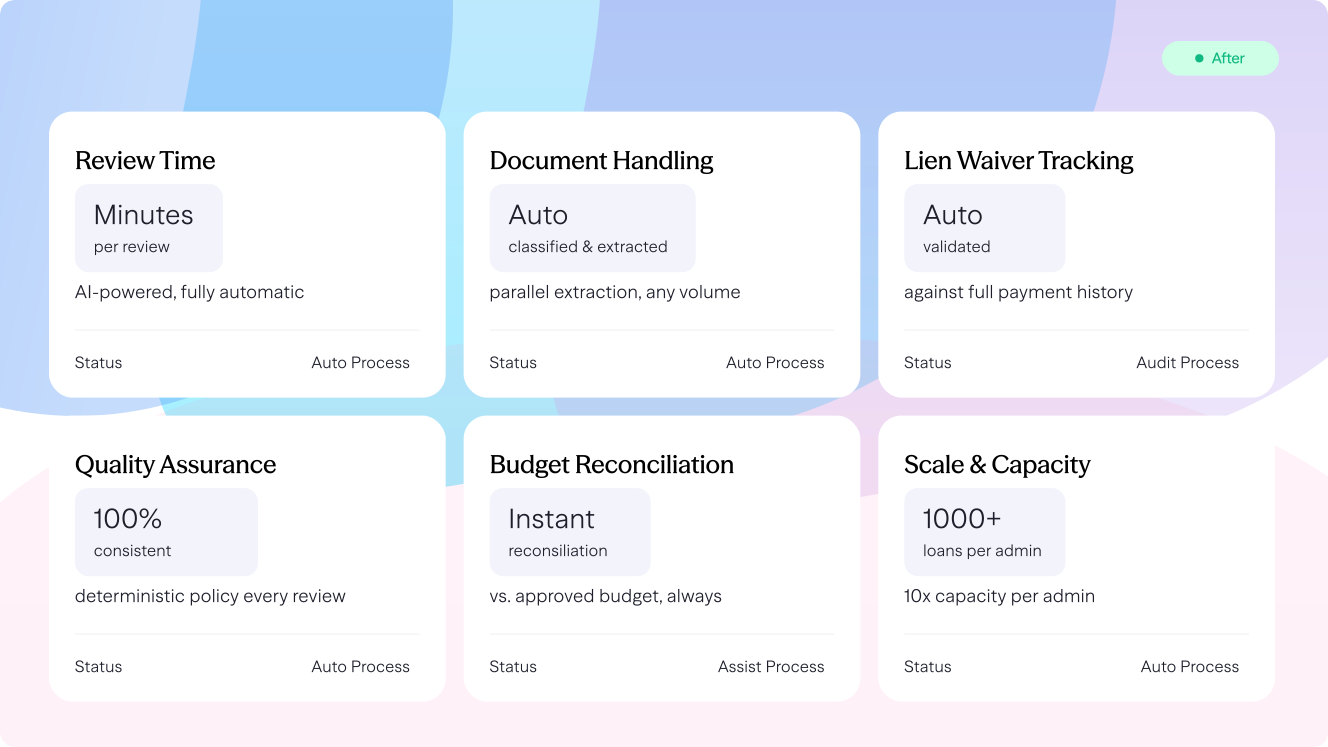
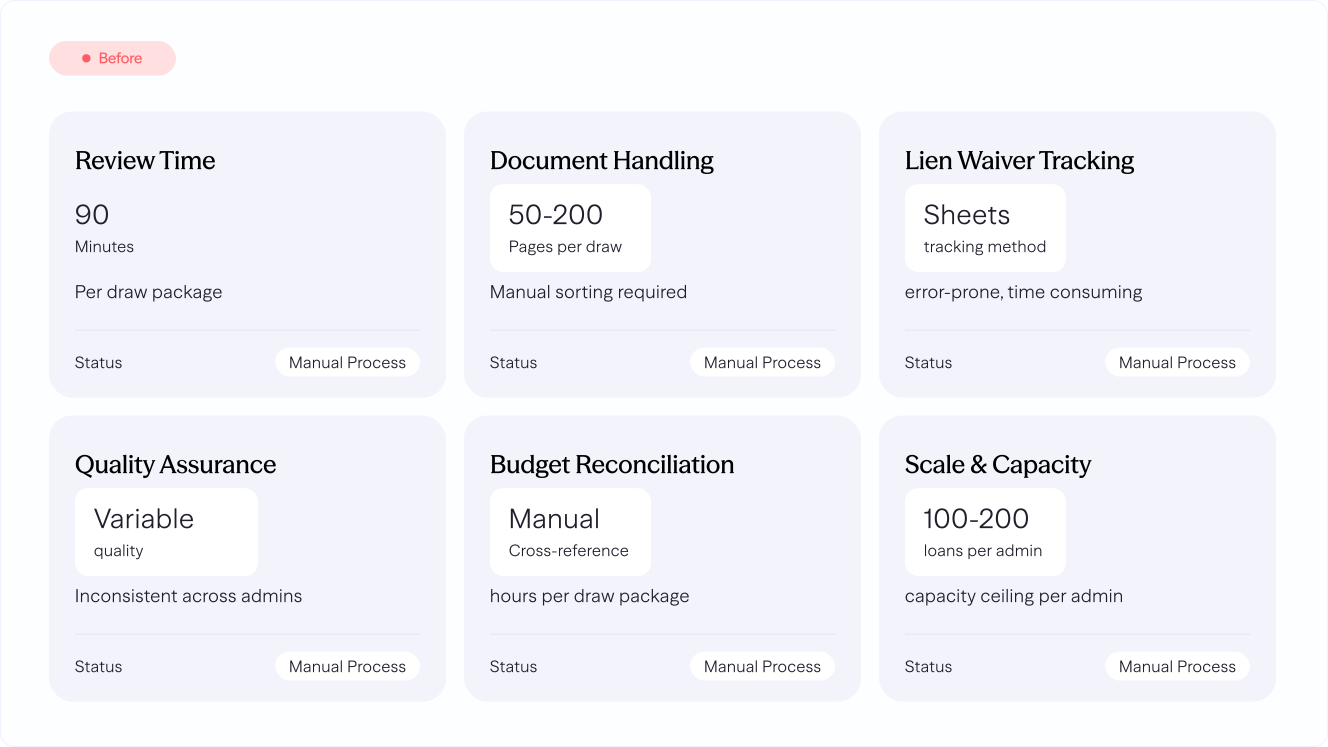
Before vs After

After Before

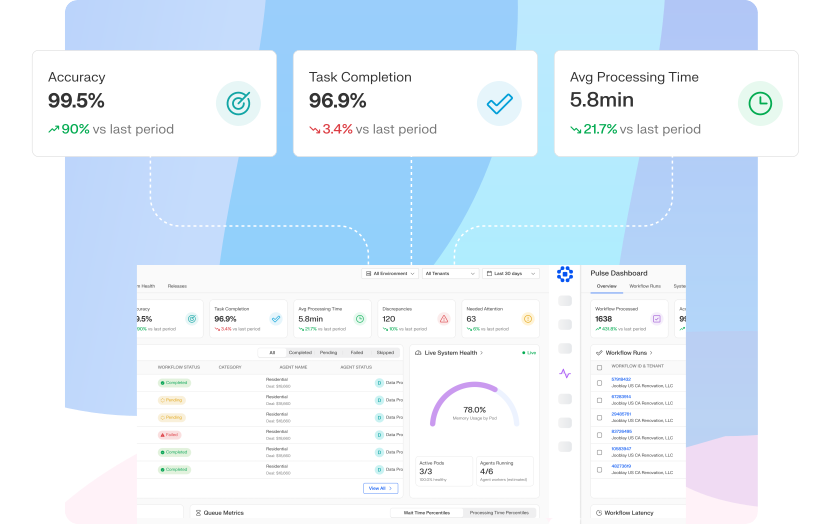
Production Metrics

Results from MightyBot production deployments; figures vary by payer and review type.

70% Faster review cycle time
80% Fewer manual steps per review
99%+ extraction accuracy on structured clinical fields
4-5x More reviews completed per clinical reviewer

Medical necessity review that finishes the work. Evidence trails that hold up: in appeals, in examinations, in court.

Use-case map

How Medical Necessity Review Automation works in MightyBot

MightyBot automates medical necessity review by extracting clinical facts, matching InterQual, MCG, or insurer-specific criteria, validating codes, and producing evidence-backed determinations.

Inputs Clinical records, referrals, prior authorization packets, lab results, imaging reports, ICD-10 codes, CPT codes, and guideline criteria.
Execution Extracts clinical facts, matches guideline branches, validates diagnosis and procedure codes, flags gaps, and routes cases needing physician review.
Outputs Evidence-backed recommendations, criteria-met and criteria-unmet determinations, appeal-ready rationale, and reviewer-ready case summaries.
Audit trail Every determination links to guideline criteria, exact source pages, clinical values, code checks, and review actions.
Best for Payers and utilization teams that need faster, more consistent reviews with defensible evidence for appeals and audits.

FAQ

Frequently Asked Questions

What is medical necessity review AI?

It is software that automates the evidence-gathering and criteria-matching steps of utilization review: extracting clinical data from medical records, matching it against InterQual or MCG criteria, validating codes, and producing a determination package a human reviewer can approve with the evidence attached.

Can MightyBot apply InterQual or MCG criteria automatically?

Clinical guidelines encoded as executable policy rules. The Policy Engine evaluates requests against applicable criteria for each diagnosis, procedure, and care setting. When guidelines update, your clinical team updates rules in plain English. No engineering.

How does MightyBot handle complex cases requiring physician review?

Cases exceeding thresholds — clinical ambiguity, high-cost procedures, partially met criteria — routed to physicians with the complete extracted dataset, criteria evaluation, and evidence trails. Physicians decide with full context already assembled.

What types of medical records does MightyBot process?

EHR exports, scanned records, faxed documents, lab reports, imaging reports, prior authorization forms. Structured clinical data extracted regardless of source format or provider system.

Does MightyBot integrate with our utilization management system?

Connects to your existing UM platform, claims system, and provider portals via APIs. Results and evidence trails flow back into your system of record. The integration is the product.

How does MightyBot support regulatory compliance?

CMS requirements, state utilization review regulations, turnaround mandates, and notice obligations encoded as policy rules. Compliance deadlines enforced, documentation generated, audit trails produced automatically.

What happens when clinical documentation is insufficient?

The system generates a specific information request — exactly what documentation is needed and why, referencing the guideline criteria that can't be evaluated without it. Precise and actionable, not generic.