Which servicing tasks are really document and deadline work?
Payment posting and statements run in the servicing system. The work that still lands on people is what arrives as paper or PDF and carries a clock: insurance declarations and cancellation notices, tax bills and escrow analyses, borrower error notices and information requests, payoff requests, loss mitigation applications, and on commercial loans the financial statements, compliance certificates and UCC continuations that ticklers chase every quarter.
The OCC's July 2026 Lending and Loan Portfolio Risk Management booklet lists these among loan administration functions: "monitoring flood, property and casualty, and liability insurance (e.g., policy changes, terminations) and force placing coverage when a borrower fails to provide evidence of insurance," "loan maturity monitoring," lien perfection monitoring for UCC filings "which generally have a five-year expiration from the filing date," and "monitoring the status of required periodic borrower financial statements and loan covenant testing."
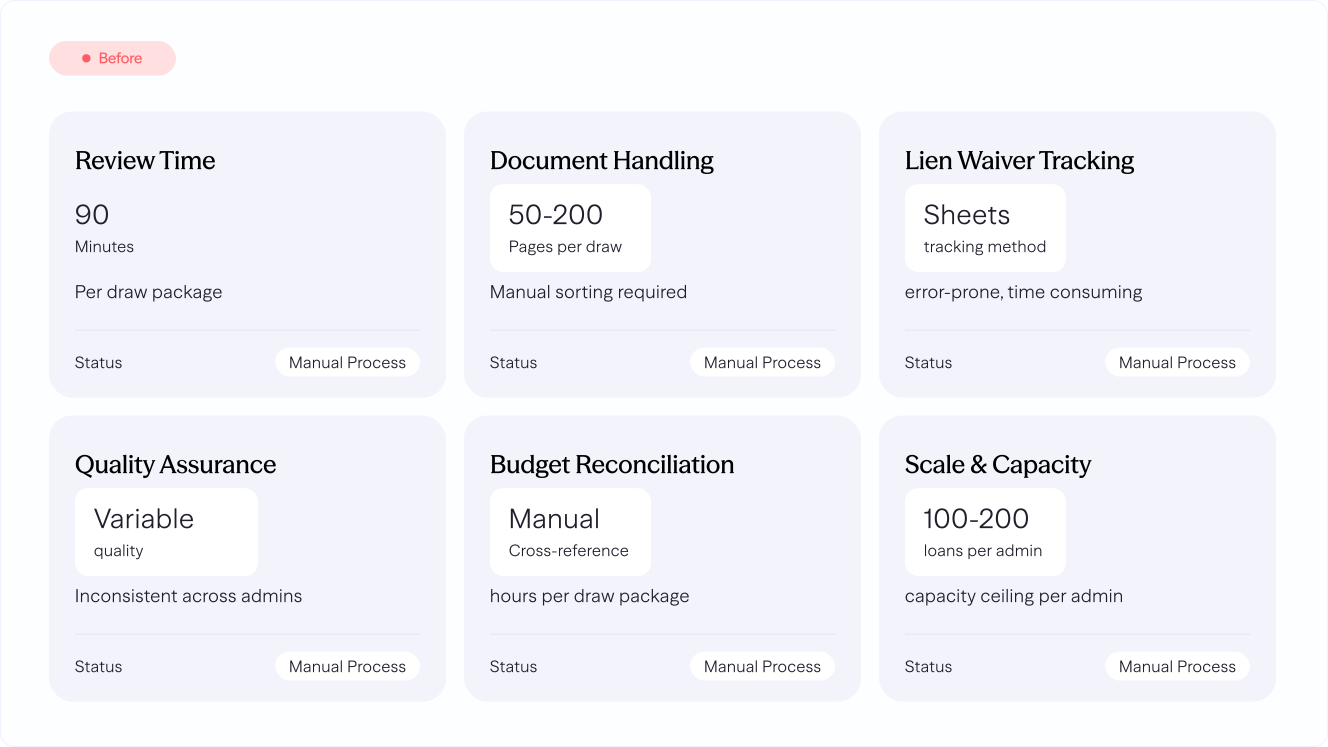
Each of those is a document to read, a fact to extract, a rule to apply and a date to hit. That is where servicing teams lose hours and where missed steps become findings.
How do AI agents handle servicing documents and clocks?
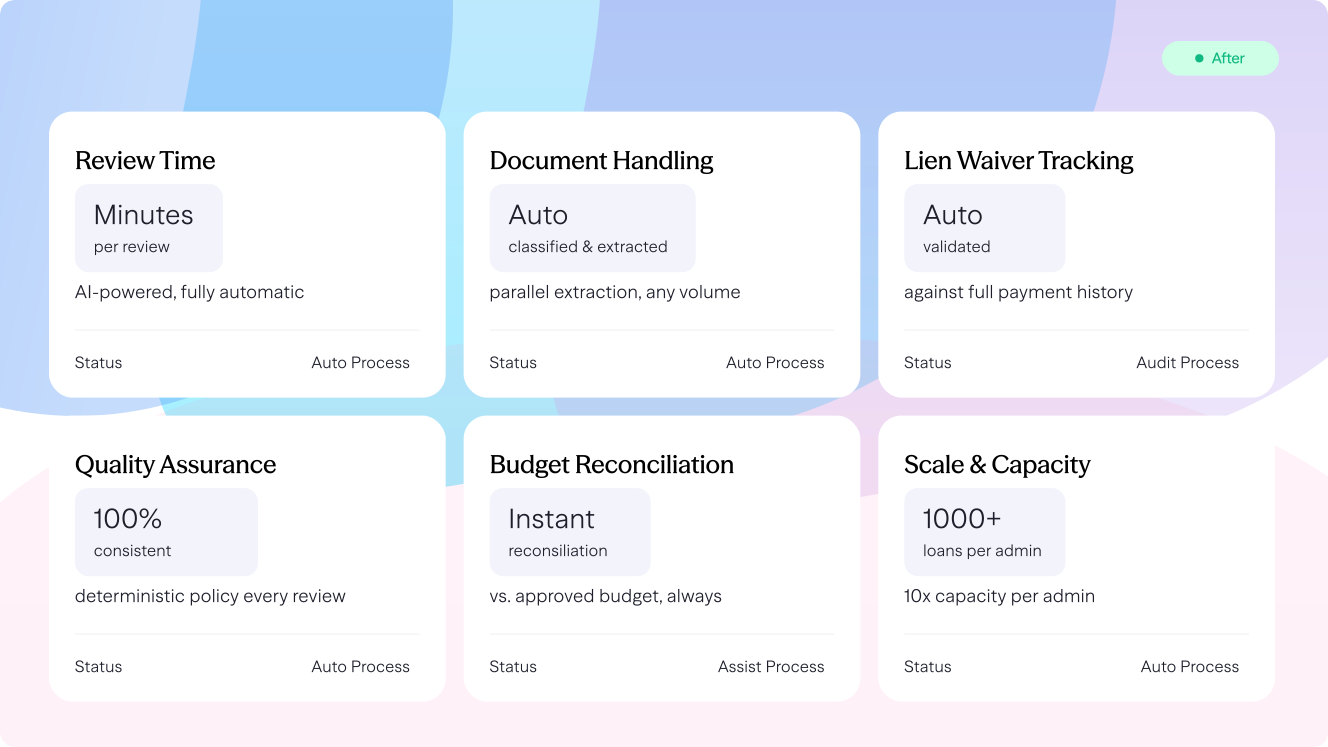
On MightyBot, agents read what arrives: a declarations page, a cancellation notice, a tax bill, an error notice, a borrower financial statement. They extract the fields that matter, such as coverage amounts, effective dates, parcel numbers, the borrower's assertion, or the ratios a covenant needs, and keep a pointer to the page each came from.
Your servicing procedures are written as plain-English policies with the applicable clocks built in: acknowledge within five business days, respond within 30, notify 45 days before force-placing, complete the annual escrow statement within 30 days of the computation year. The agent checks the document against the loan record, drafts the required notice or response, and routes exceptions to a servicing specialist with the evidence attached.
Every action lands in a record that shows the document, the rule, the dates and the person who approved it, which is what a servicing file has to reproduce on request. The same pipeline runs covenant monitoring for commercial books.
What do the servicing rules require on timing and records?
Regulation X sets the mortgage clocks. Under 12 CFR 1024.35, "Within five days (excluding legal public holidays, Saturdays, and Sundays) of a servicer receiving a notice of error from a borrower, the servicer shall provide to the borrower a written response acknowledging receipt," and most errors must be resolved "not later than 30 days" after receipt. Force-placed insurance charges need a notice "at least 45 days before a servicer assesses on a borrower such charge or fee." The annual escrow statement is due "within 30 calendar days of the end of the escrow account computation year."
Regulation Z adds that "No servicer shall fail to credit a periodic payment to the consumer's loan account as of the date of receipt," with narrow exceptions, and that a payoff statement must be sent "in no case more than seven business days, after receiving a written request." The interagency flood insurance questions and answers state that "If the borrower fails to purchase flood insurance coverage within 45 days after notification, the lender must force-place the insurance."
Records have their own rule. A servicer must keep documents and data "in a manner that facilitates compiling such documents and data into a servicing file within five days," and retain records "until one year after the date a mortgage loan is discharged" or servicing transfers. The OCC's Mortgage Banking handbook adds that "Servicers must closely monitor property taxing authorities and individual insurance contracts to ensure that escrow calculations are accurate and that insurance policies have not lapsed."