Credit Risk Evaluation Automation
What is Credit Risk Evaluation?
AI credit risk evaluation runs the analysis under your written credit policy: financials spread, ratios computed, policy tests applied, and the risk assessment drafted with every input traceable to its source. The model never freelances the credit decision; policy governs what passes, what fails, and what escalates.
Automate Credit Risk Evaluation
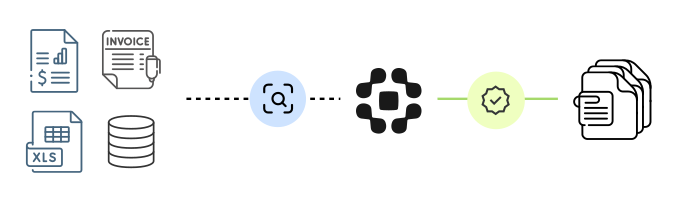
Every credit memo starts the same way: pull financial data from tax returns, income statements, balance sheets, and cash flow statements across multiple years and entities. Calculate ratios. Apply policies. Assemble the memo. MightyBot executes this in minutes with every number traced to source.
The Problem
Analysts spend the majority of their time on data gathering and spreadsheet construction rather than credit judgment. Inconsistency compounds: two analysts calculate DSCR differently based on which adjustments they include. Memo formats vary, making portfolio-level risk reporting unreliable. Regulators examining inconsistent credit files increase scrutiny systematically. Financial statements arrive in different formats. Multi-entity borrowers require consolidation. Manual processes don't scale.
Format variability
Financial statements from different firms in different formats and standards
Multi-entity complexity
Consolidated analysis with intercompany reconciliation
Ratio inconsistency
DSCR and leverage metrics calculated differently by different analysts
Policy interpretation
Credit policies applied with varying rigor across branches
Memo assembly
Hours of manual synthesis that looks different every time
How MightyBot Executes
-
Financial data extraction
Statements, tax returns, schedules from any format. FRS canonicalization maps line items to the Canonical Field Library. Multi-year, multi-entity financials normalized.
-
Risk metric calculation
DSCR, debt-to-equity, current ratio, cash flow coverage with transparent inputs. Every formula documented with evidence pointers to source.
-
Policy-based evaluation
Your credit policies evaluated deterministically. Passes at one branch, passes at every branch. The engine does not interpret, it executes.
-
Credit memo generation
Consistent, auditable format matching your standards. Every data point includes evidence pointers. Ready for committee. No manual assembly.


Before vs After
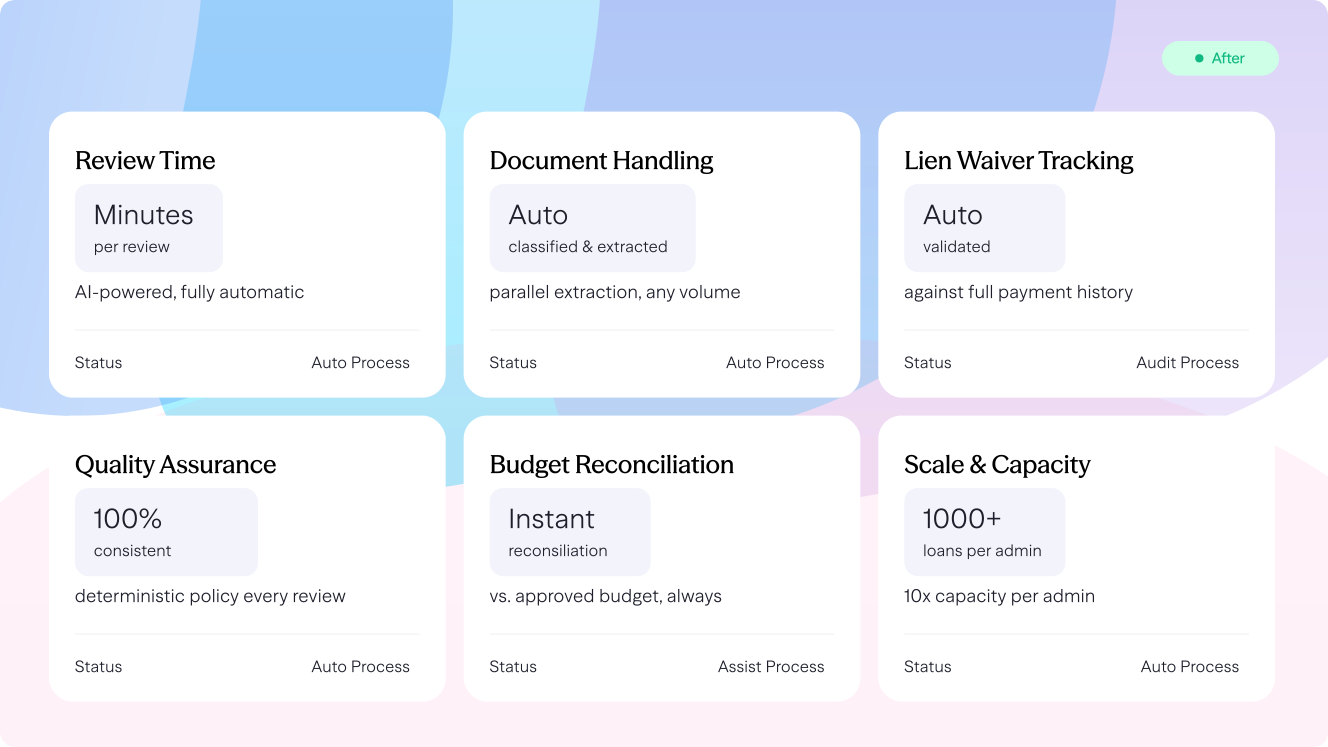
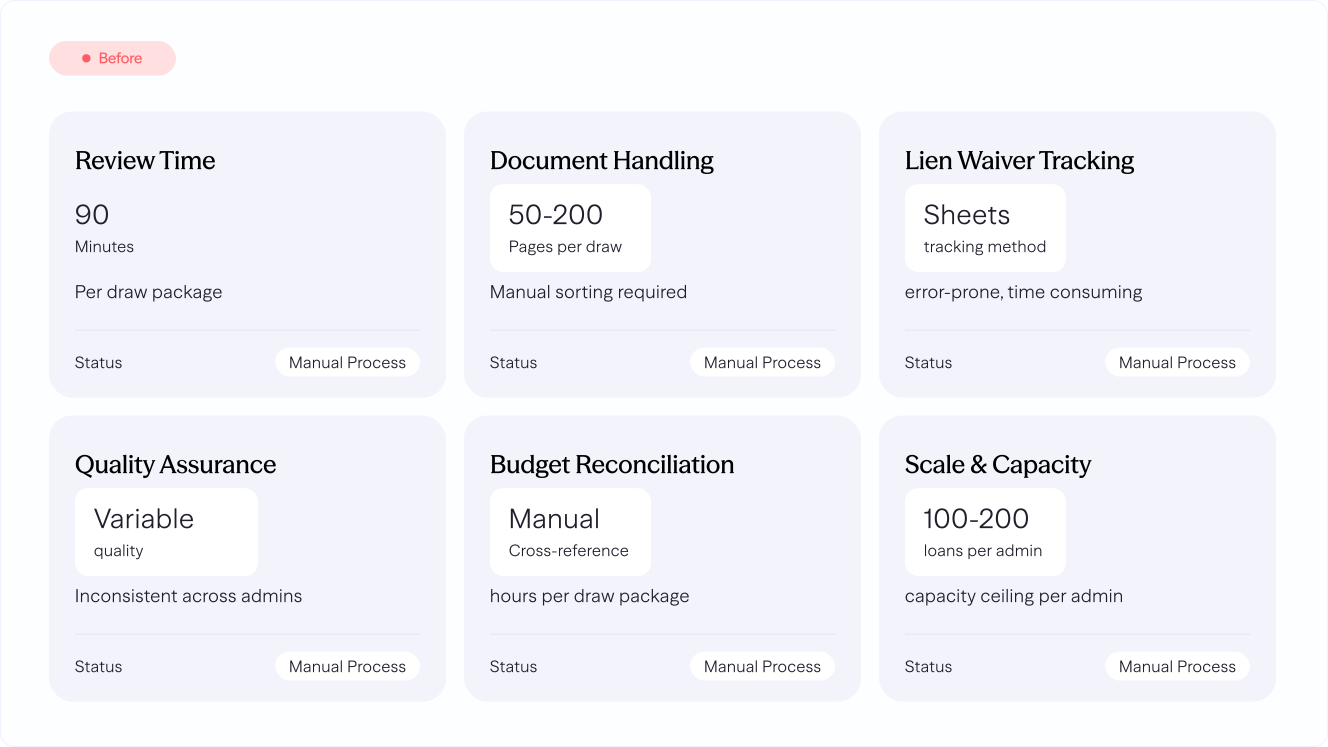
Production Metrics
Measured in MightyBot production deployments.
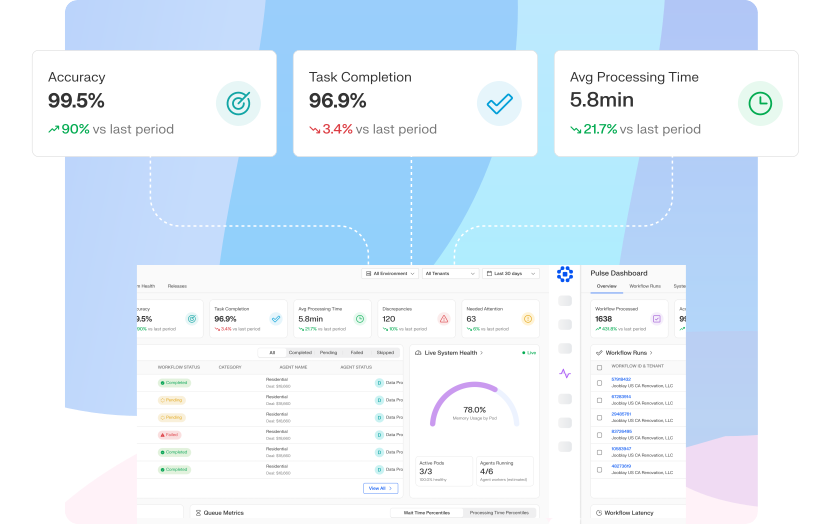
Credit memos in minutes. Every number traced to source.
Request a demoUse-case map
How Credit Risk Evaluation Automation works in MightyBot
MightyBot automates credit risk evaluation by extracting financial data, calculating ratios, applying credit policies, identifying exceptions, and generating evidence-backed memos.
| Inputs | Financial statements, tax returns, borrower schedules, guarantor data, credit reports, policy rules, and historical portfolio context. |
|---|---|
| Execution | Extracts and normalizes borrower data, calculates DSCR and risk metrics, evaluates policies, detects inconsistencies, and assembles credit analysis. |
| Outputs | Credit memos, ratio schedules, risk flags, policy exceptions, analyst-ready summaries, and evidence-backed decision packages. |
| Audit trail | Every memo value and risk finding links to the source statement, line item, policy rule, and calculation path. |
| Best for | Credit teams that need consistent analysis and examiner-ready files without spending analyst time on data gathering. |
FAQ
Frequently Asked Questions
How does AI evaluate credit risk?
By executing the credit policy rather than predicting around it: extract the borrower's financials, compute the required ratios, apply each policy test deterministically, and assemble the assessment with evidence links. Judgment stays with credit officers; the mechanical analysis stops consuming their week.
What makes credit risk automation auditable?
Every evaluation records its inputs, the policy version applied, each test's result, and any override. An examiner can take any decision and replay it: same inputs, same policy, same result.
How does MightyBot calculate DSCR and financial ratios?
Line items are extracted from financials, then adjustments are applied according to your methodology for add-backs, one-time items, and normalization. Every formula and source remains documented.
Can MightyBot handle multiple entities?
Yes. Multiple entities can be processed and normalized within the same framework, including intercompany relationships, guarantor analysis, and global cash flow consolidation.
Does MightyBot replace credit analysts?
No. It finishes extraction, normalization, and calculation so your team can spend more time on actual credit judgment instead of spreadsheet assembly.
How does MightyBot handle different accounting standards?
FRS canonicalization maps line items across GAAP, tax basis, cash basis, and different compilation or review formats into one consistent schema.
Can we customize the credit memo template?
Yes. Section order, disclosures, ratio definitions, and policy presentation can all match your institutional template while preserving evidence pointers.
What if borrower data has inconsistencies across documents?
Discrepancies are flagged automatically with evidence pointers to both conflicting sources so they are visible before committee review rather than discovered later.