Audit produces accuracy data
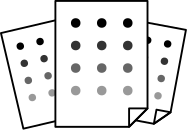
99%+ accuracy in the flagship production lending deployment, with AI catching errors humans missed, makes the case for Assist objective.
What is progressive autonomy?
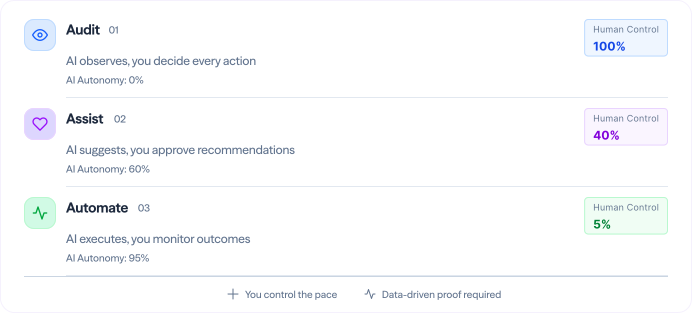
Progressive autonomy is a staged deployment model for AI agents in regulated work: the agent starts by shadowing humans, earns review-gated authority, and only automates once its accuracy is proven on your own data. MightyBot implements it as three levels (Audit, Assist, Automate), each with an explicit graduation criterion and an audit trail throughout.
Most AI vendors present a binary: automate or do not. That does not work in regulated industries. Compliance officers cannot sign off on automation they have never observed. Regulators will not accept sandbox results as production evidence.
Progressive Autonomy breaks this deadlock. It does not ask for trust on day one. It earns it.
THREE STAGES
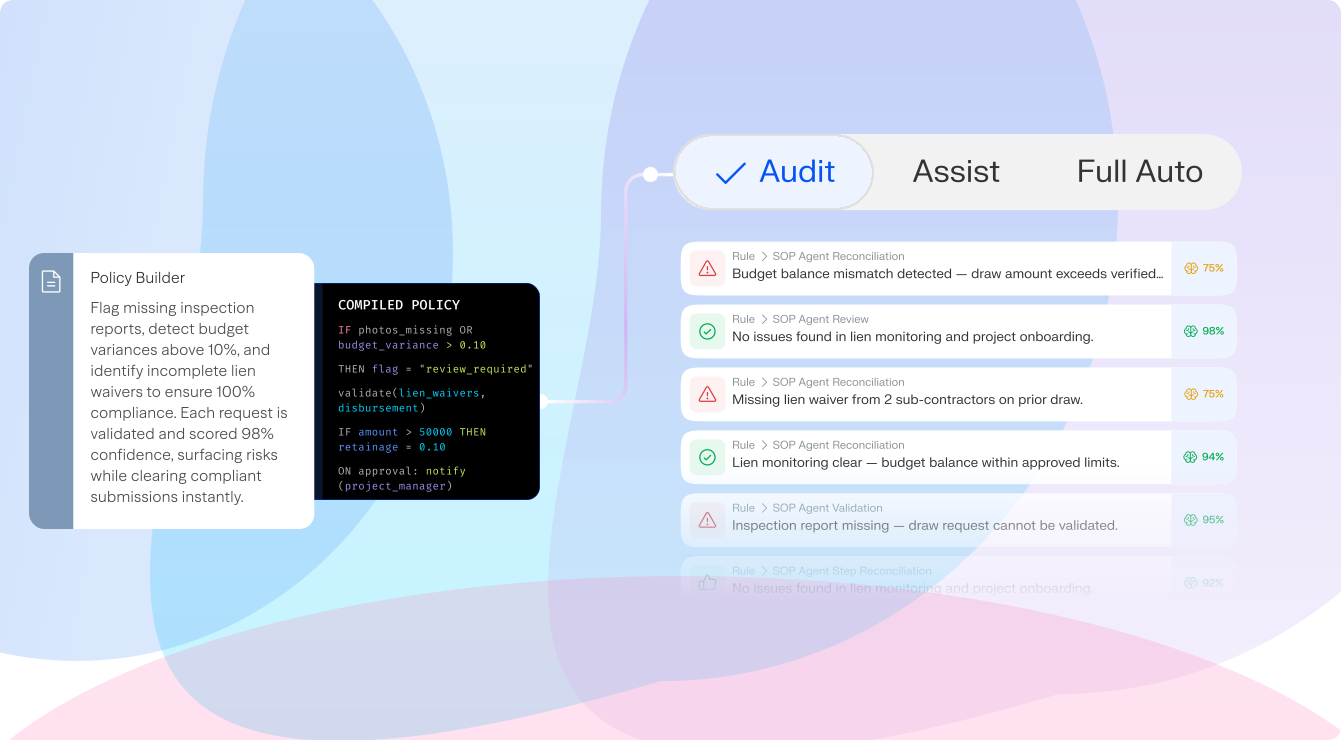
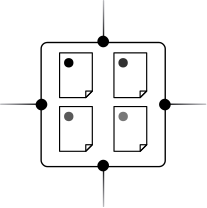
Each stage produces the evidence that justifies the next.
99%+ accuracy in the flagship production lending deployment, with AI catching errors humans missed, makes the case for Assist objective.
70%+ time reduction in MightyBot production deployments and consistent compliance make the case for automation equally objective.
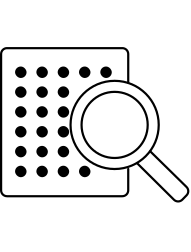
Routine transactions flow. Humans focus on exceptions. 95% time reduction in production, measured in the Built Technologies draw agent deployment .
THE FEEDBACK FLYWHEEL
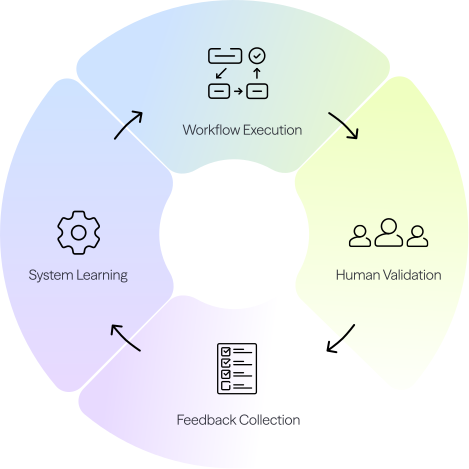
A proprietary evaluation system measures accuracy, time saved, and human overrides. Teams refine policies. The agent improves. The advantage compounds.
ARCHITECTURE
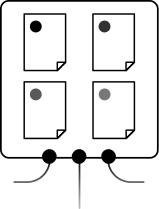
Documents and data classified, extracted, and mapped to a canonical structure with full evidence traceability.
Plain English policies evaluate structured data deterministically. Every evaluation traced to its source rule.
Results write back to your systems of record. Full audit trail generated automatically.
Even in full Automate, confidence thresholds are enforced, policy violations trigger escalation, and override authority is always available.
Related pages
Connect progressive deployment to policy controls, lending workflows, build-versus-buy decisions, and measurable ROI.
FAQ
A deployment model where an AI agent's authority increases in defined stages, each unlocked by measured performance on your own workload rather than by vendor claims. It is how regulated teams get to full automation without ever losing the ability to show their regulator what changed and when.
In MightyBot's model there are three: Audit (agent shadows, humans decide), Assist (agent drafts, humans approve), and Automate (agent executes, humans handle exceptions). Each level has an explicit graduation criterion based on live agreement and override data.
Automation where a person remains part of the decision path: reviewing drafts, approving actions above thresholds, or handling exceptions. The design question is not whether humans are in the loop but where, and what evidence moves that boundary safely.
Audit usually runs 2-4 weeks. Assist can begin as soon as Audit data validates accuracy. Most organizations begin selective automation within 60-90 days, and you control the pace.
Yes. Many institutions keep high-complexity workflows in Assist permanently. Progressive Autonomy is not a forced march to full automation - it lets you choose the right level for each workflow based on evidence.
Each stage produces auditable evidence. Audit creates accuracy data against human ground truth. Assist creates decision records showing human review. Automate adds complete why-trails and policy traceability.
The evaluation system monitors continuously. If accuracy drops below thresholds, the system automatically escalates more transactions to human review and notifies your team so the workflow steps back toward Assist.
Yes. Progressive Autonomy applies per workflow. Routine classification might run in Automate while complex underwriting stays in Assist, each with its own policies, thresholds, and escalation rules.
Pilots are temporary experiments that produce a report. Progressive Autonomy is a permanent operating model. Audit is the first stage of production deployment, and the AI processes real transactions from day one.